
Inspection checklist / Second-hand roof boxes
Buying a Second-Hand Roof Box: What to Check
Inspect a second-hand roof box for shell damage, mounts, hinges, locks and missing parts. Check compatibility and total cost before buying.
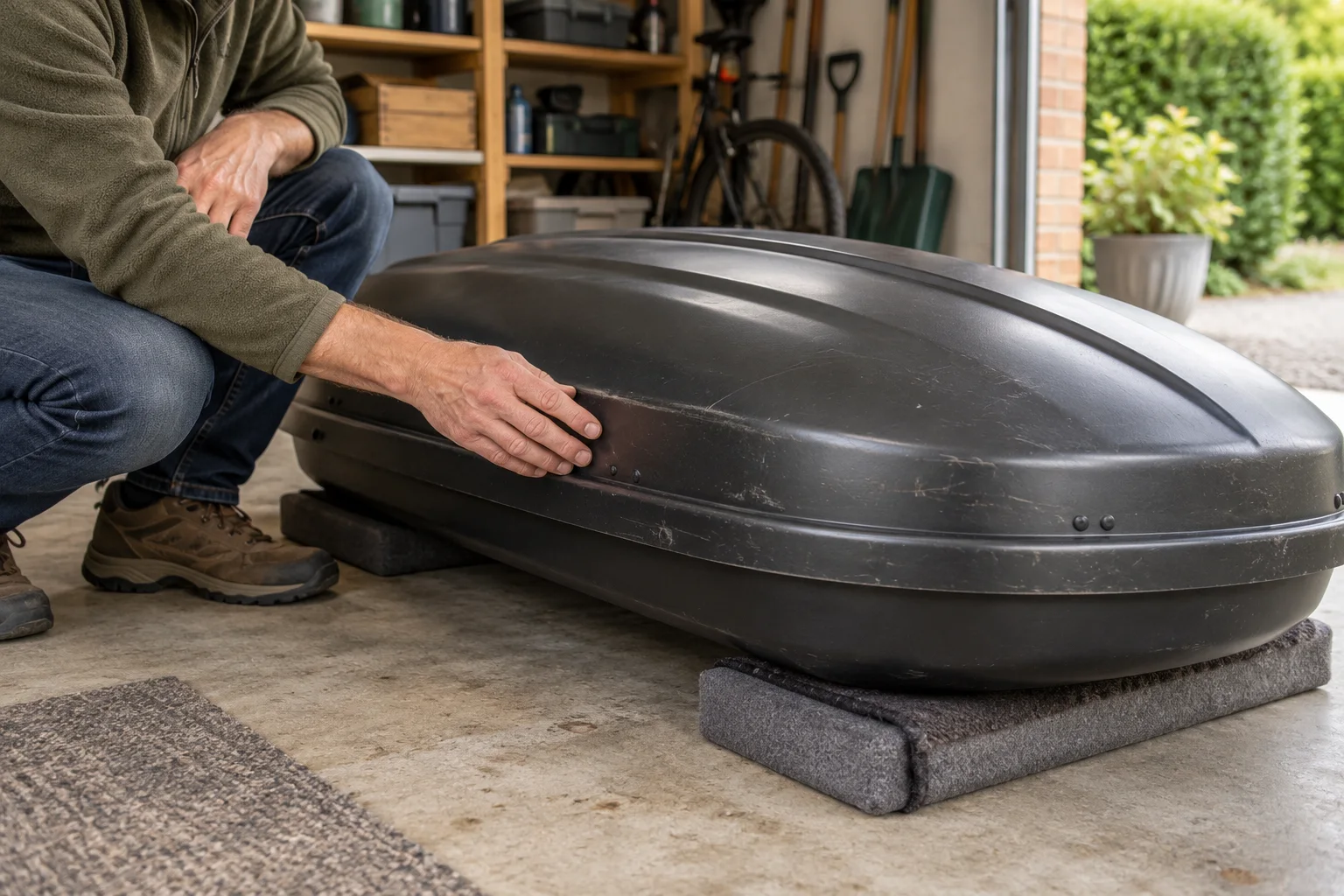
A low price is only the starting point
Identify the exact box, check the shell and every working part, and confirm an approved fit to your rack before paying. Unknown damage, modified mounts or missing safety-critical parts are reasons to pause and get manufacturer advice. A photograph cannot certify a used box’s condition.
Identify the box before arranging a collection
Ask for the full model name, product label and any manufacturer identifiers used for parts enquiries. A capacity estimate or a photograph of a similar current box is not enough. Older ranges can use different mounts, locks and lid supports from products with a similar name.
Request clear images of the underside, mounting points, interior reinforcement, hinges, lid supports and locks. Ask whether the seller has the instructions, all original fittings and every key. Find the correct manual yourself and compare its parts list with what is included.
Clarify the box's history: how it was stored, whether it has contacted a barrier, been dropped, been involved in an incident or had repairs. An account of careful ownership is useful context, but it does not replace inspecting the actual unit. If the model or history remains uncertain, factor that into whether it is worth travelling to view it.
Check the manufacturer’s current safety notices using the exact model and identification details before buying. For Thule equipment, use its official recall page. A notice can concern particular components or batches; a familiar range name and an apparently good condition do not resolve that check.
Confirm your vehicle and rack independently
A box that worked on the seller's car may not work on yours. Check the vehicle's permitted rack, actual bar profile, approved spacing and the box-to-bar mounting requirements. Include hatch movement and the total installed height.
Do not accept “fits any bars” as a compatibility check. Ask for the exact fittings and compare them with the manual. Replacement bolts, missing plates, mixed clamps or extra drilled holes need manufacturer assessment before the box can be treated as usable.
An older Ocean 600 is one example where model identification matters. Its selected UK variant, opening system and Easy-Snap hardware should be checked against the actual unit, rather than assuming every old Thule box has the same fittings.
Inspect the shell, base and reinforcement
View the box in good light, empty and supported appropriately. Look at the underside as well as the lid. Pay particular attention to mounting areas, hinge attachments, edges and any area showing whitening, distortion, cracks or signs of repair.
Cosmetic scuffs and structural damage are different questions. We cannot provide a universal scratch-depth or age threshold that makes a shell serviceable. If a mark, distortion or repair could affect the structure, ask the manufacturer to assess it or choose another box.
Do not plan to cover a crack with tape, drill the ends or reinforce the base with improvised hardware. A low asking price is not a reason to take on a safety-critical repair without the manufacturer's route. Stop-use advice for a damaged shell should be resolved before collecting equipment for a trip.
Check every mount and its supporting parts
Use the parts list to count the complete set. Inspect brackets, plates, knobs, clamps and their attachment points for bending, corrosion, damaged threads, missing pieces and signs of forced tightening. Check that the parts belong to the exact box and mounting generation.
A mechanism should operate according to its instructions without force or makeshift packing. Confirm that all required locks or securing features engage. Do not take a successful trial on the seller's bars as proof of fit to your own rack.
Check the cost and availability of genuine missing parts before agreeing a purchase. A cheap shell with an incomplete mounting kit can become an expensive or unusable project. The mounting-systems guide explains why visual similarity is not enough.
Operate the lid, hinges and locks normally
Ask the seller to demonstrate a normal opening and closing cycle. Check the lid supports, hinges and every required locking point. Keep hands clear and do not stand beneath a lid with uncertain supports.
A lid that falls, catches or needs unusual pressure to close requires investigation. A stiff lock might be associated with a closing problem, damaged parts or an incorrect key; do not assume lubricant will fix it. Avoid products that need a workaround simply to demonstrate normal closure.
Record key numbers privately after purchase and keep the information with your equipment record. Do not publish photographs of keys or identifying lock details in a public sale or review record.
Price the complete usable purchase
Add the asking price, collection, approved replacement parts and any required rack components. Include a suitable storage arrangement if you do not already have one. Compare that total with a new compatible option and with hire for the number of trips you actually expect.
Do not count on a particular resale value or assume an older premium model will be cheaper to maintain. Obtain actual current quotes for missing items, and compare the same load capacity, useful interior and fit requirements. A bargain that cannot be made complete is not a carrying solution.
Take this inspection list to the viewing
- Match the label and identifiers to the correct instructions.
- Check the empty lid, base, reinforcement and mounting areas in good light.
- Compare every included fitting with the parts list.
- Operate hinges, supports, locks and keys through their normal sequence.
- Confirm the actual dimensions and approved fit to your rack.
- Resolve damage, repairs and missing parts with the manufacturer before use.
- Check lifting help, transport home and suitable storage.
If the seller cannot provide access to inspect the underside or operate the box, the condition remains unknown. There is no obligation to complete a purchase because you have travelled to view it. An incomplete assessment should not be turned into reassurance.
Prepare the first trip as a fresh installation
After buying a suitable unit, follow the full installation instructions on your own approved rack. Calculate the luggage allowance using the actual equipment weights, check the hatch and height, and trial the intended packing arrangement before travel.
Keep the manual, parts record and keys together. Recheck the equipment according to the manufacturer's intervals; the seller's account of past trips does not replace your own checks. Compare hire and ownership if the inspection or parts situation makes buying unattractive.
Checklist reviewed October 2026 against Thule cargo-box safety guidance and the Ocean manufacturer instructions. It is a buyer's inspection aid, not certification that a particular used box is serviceable.
Frequently asked questions
How old is too old for a second-hand roof box?
There is no universal age threshold in this guide. Identify the model, assess its condition and history, and ask the manufacturer about support and any age-related guidance for that exact unit.
Can I buy a box with missing clamps and add generic replacements?
Do not assume generic fittings are suitable. Confirm the exact manufacturer-approved parts, their availability and total cost before agreeing the purchase.
Are scratches a reason to reject a used box?
Cosmetic scuffs may differ from structural damage, but a photo cannot establish that distinction reliably. Cracks, distortion, uncertain repairs or damage around mounts need proper assessment.
Can I replace a lost key?
Sometimes, using the correct key/lock identifier and manufacturer service route. That does not solve a damaged housing or locking mechanism. Check the exact model before buying parts.
Should I test-fit the used box before paying?
A permitted fit check on your own approved rack is useful when it can be arranged safely. Complete the condition inspection and manual checks as well; fitting alone does not establish serviceability.