
Troubleshooting guide / Packing, storage and care
Replacement Roof Box Keys: Identifying the Correct Key and Lock
Identify the correct replacement roof-box key by exact lock family and code. Understand cut-to-code listings, missing codes, damaged locks and compatible cylinder sets.
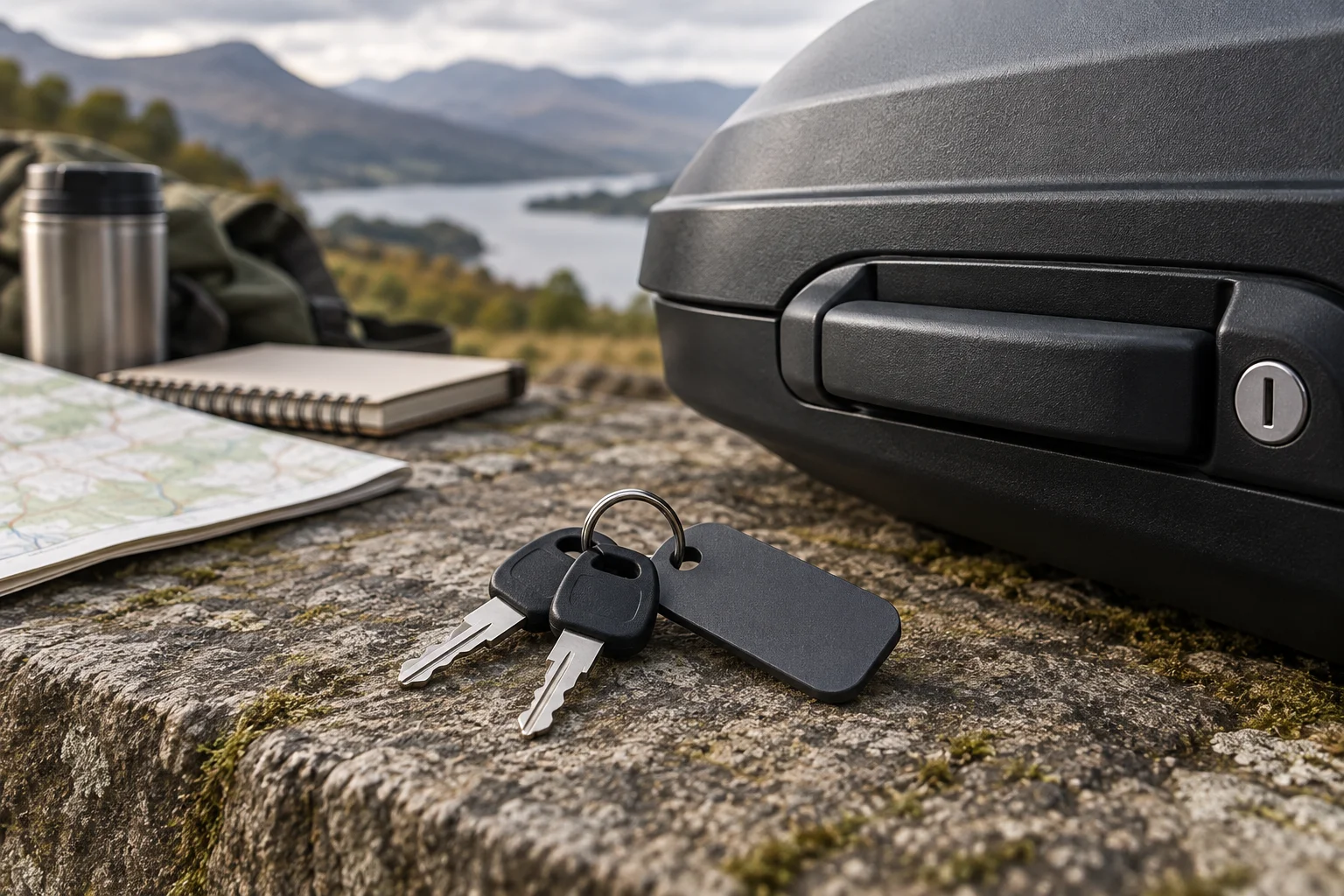
Identify the lock before choosing the key
Find the exact key code and lock family, preserve every prefix and leading zero, and confirm the selected replacement matches. A box model name is not a key number. If the code or mechanism is uncertain, use the manufacturer’s identification or service route before ordering.
Separate a missing key from a failed lock
First establish the problem. A lost operating key, a worn key, a stiff mechanism and a damaged handle are different issues. A newly cut key may solve the first one without addressing a seized lock, distorted lid or damaged closing system.
Check the box is supported and unloaded as appropriate before investigating ordinary access problems. Do not force the handle, use the key as leverage or drive with an incompletely closed box. If the mechanism is locked and the correct operating key is unavailable, contact the manufacturer or an authorised service provider rather than attempting an improvised opening.
Our cleaning and inspection guide covers the distinction between routine care and damage. A replacement-key purchase should follow identification, not substitute for assessing a failing lock.
Record the exact box and actual lock identity
Read the box label and note the model and generation. Then record any key or lock code using the maker’s guidance. Keep a clear private record so similar characters, a missing prefix or a lost leading zero do not change the order.
The box name alone is insufficient. A previous owner may have changed cylinders, and different products from the same manufacturer can use different lock systems. Likewise, an identical-looking handle does not prove the same key blank or code series is used.
For Thule systems, the support guidance describes an N-XXX code around the keyhole as a key-number reference. Use that information only for a lock confirmed to belong to the relevant system. A different brand or generation needs its own identification instructions.
Preserve the full code and check the selected listing
Read the exact product selection rather than just the search-result title. A listing can offer a range of codes, show an example photograph or retain a broad title while a particular code is selected. Confirm how the seller specifies the code and what quantity will be supplied.
Do not assume the number in a seller’s internal part reference is the code on your box. Compare it with the actual lock record and obtain clarification if the listing combines several options. A code that differs by one character is a different purchase, not a close enough spare.
This example shows why the product beside the advice still needs a reader-specific check. If your code is not N126, do not order this selected option on the assumption that all keys for the brand are interchangeable.
Use the maker’s route when the code is missing
If the original key and its record are unavailable, inspect only the identification information the maker says to use. If no readable code exists, contact the official support or authorised key-identification service with the product details and ownership information it requests.
Avoid ordering a sequence of guessed codes or a “master” item based on an ambiguous marketplace title. An installation or change key for a cylinder system is not the same as the operating key that opens your particular lock. A service provider can establish the appropriate route when ordinary identification is insufficient.
Keep the enquiry focused: exact box model, whether the system is currently open or locked, any readable code and whether the key or mechanism appears damaged. That is more useful than a photograph of a similar product found online.
Decide whether a cylinder change is actually needed
Replacing a missing operating key normally retains the existing lock code. Changing cylinders is a different job, useful where compatible equipment is deliberately being matched or where the manufacturer specifies replacement of a damaged component.
Confirm the required existing access and tools before buying a set. If the system is locked and the necessary operating access is missing, obtain service advice first. Do not dismantle or force the mechanism to make a cylinder purchase usable.
Check a supplied spare before relying on it
Confirm the received code and quantity against the order, then follow the product maker’s normal operating instructions for a controlled functional check. Stop if the key does not enter or turn normally. Do not file it, force it or use it to pull an overpacked lid into place.
If a correct-code key still fails, the issue may require further identification or mechanical assessment rather than a second guessed purchase. Ask the seller about the supplied item and the manufacturer about the mechanism, keeping those two questions separate.
| Record | Why keep it | Avoid |
|---|---|---|
| Box model and generation | Find the correct support and parts route | Ordering only by approximate box shape |
| Lock family | Confirm the key series | Assuming all locks from one brand match |
| Complete operating code | Preserve prefix and leading zeroes | Guessing an unreadable character |
| Selected product and quantity | Verify what is actually supplied | Relying on a generic example photograph |
| Current condition | Distinguish lost key from damaged mechanism | Forcing a new key into a failing lock |
Keep spares and a private record separately
Once normal operation is confirmed, keep a spare in a secure place separate from the main key. Record the code where it remains available when the box is locked and where it will not be confused with the code for another carrier. There is no need to publish the code on an exterior tag or in a public sale photograph.
For a shared household setup, make clear which key belongs to which item and where the spare is kept. If the aim is one operating key across compatible equipment, use the matching-locks guide to plan all cylinder positions before changing parts.
Before the next journey, verify the box closes and locks correctly with the intended key, then complete the normal departure checks. A spare key is useful only when the underlying system remains sound.
Sources checked October 2026: Thule replacement-key support, spare-parts identification, One-Key 450800 and the selected ZeLock Amazon package. Confirm the actual code and system before purchase.
Frequently asked questions
How do I find the correct replacement key number?
Check the original key, your ownership records and any code the maker identifies on the lock. Preserve the full prefix and leading zeroes, then confirm the code belongs to that exact lock family.
Is a key number the same as the roof-box model?
No. A box model can contain locks with different key codes, especially after previous replacement. Use the actual lock or key identification rather than ordering from the box name alone.
Will the N126 example fit every Thule lock?
No. The selected ZeLock listing identifies TCKEY-N126 and is a third-party replacement example. It is relevant only after the actual N126 code, compatible lock family and seller selection are confirmed.
What if the lock has no readable number?
Use the manufacturer’s support or authorised identification route with the box and ownership details. Do not guess from a similar-looking key or assume a replacement cylinder set will open an unidentified locked mechanism.
Does a One-Key set solve a lost key immediately?
It is a compatible cylinder-replacement product, not a universal opening key. Follow the exact authorised replacement procedure and obtain service help where the required existing access or identification is unavailable.