
Comparison / Roof bars and compatibility
T-Track vs Clamp Mounting for Roof Accessories
Compare T-track and around-bar clamps for roof boxes and sports carriers. Check adapter numbers, track dimensions, clearance and compatible Amazon products.
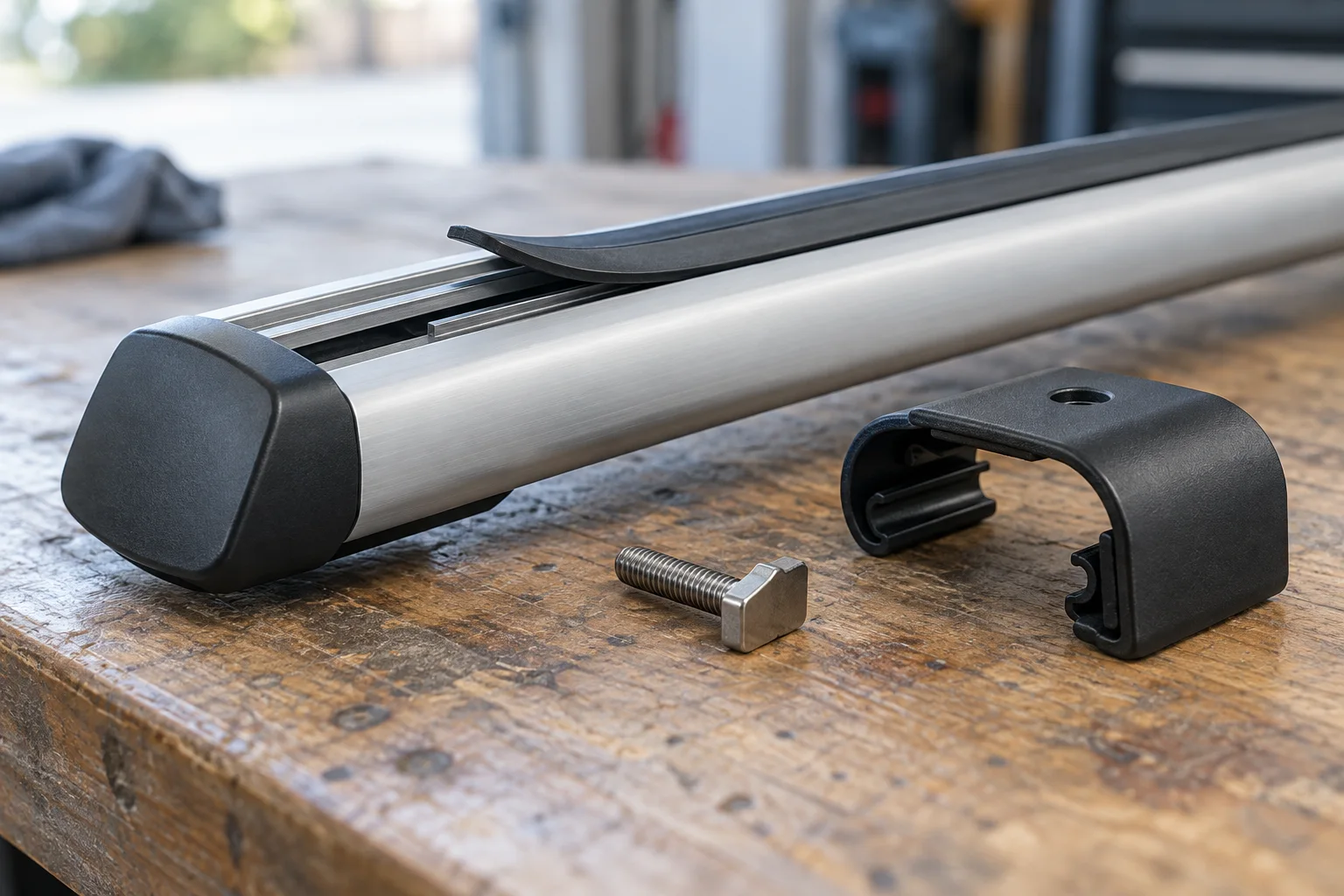
An interface is not a universal fit
T-track fittings engage the bar’s accessory channel; clamps pass around the bar. Either can work well in an approved combination. Match the accessory, bar profile and exact hardware, then check the permitted position and clearance rather than choosing on the interface name alone.
Keep the two mounting questions separate
The rack’s feet and fitting kit attach the bars to the car. The accessory mount then connects a roof box, bike carrier or other equipment to those bars. Confirming one connection does not confirm the other. A T-bolt that slides smoothly into a channel says nothing about whether the rack is approved for the vehicle.
Start with the complete vehicle fit result and the actual bar model. Next identify the exact accessory generation and supplied mount. Similar-looking boxes or carriers can use different fittings, and a used accessory may have replacement hardware that does not belong to it.
For a box, retain the model label and mounting instructions. For a sports carrier, record its own model and any adapter already fitted. This small inventory prevents an expensive mistake: buying a track conversion for a roof-box PowerClick mount when the equipment you need to attach is actually a bike carrier with a different interface.
Understand how a T-track connection works
A compatible adapter engages the bar’s top channel and connects to the accessory using its specified fasteners and interfaces. The exact dimensions of the head and channel matter, but so do thread, usable length, seating and the accessory-side connection. “20mm T-track” is a starting specification, not the whole approval.
Check whether the adapter is optional, necessary or unsuitable for the actual combination. A product photograph may show the mechanism conveniently, but the parts list and compatibility documentation are what establish the intended use. Confirm the supplied revision and hardware if the retailer title and current manual use different identifiers.
Understand how around-bar clamps work
Clamps, jaws and U-shaped brackets surround the bar using the accessory’s designed securing arrangement. Their compatibility depends on bar width, height and shape, plus the room needed underneath and around the fitting. A mount can be wide enough yet still fail to seat correctly on a curved or unusually deep profile.
The hardware inside the accessory matters as much as the part you see underneath. Reinforcement plates, knobs, brackets and the shell or carrier interface must remain the approved combination. Do not substitute longer bolts or omit a plate to reach around a different bar.
A clamp mechanism can be convenient for moving an accessory between compatible racks, but each rack still needs checking. Transferring a box from narrow steel bars to broad aero bars does not carry the previous fit approval with it. Our roof-box mounting comparison explains the differences between conventional brackets and quick clamps.
Match the mount to the exact bar profile
Also check obstructions near the intended mounting position. A rack foot, underside cover, glass panel or roof contour can interfere with a clamp. A T-track can appear continuous even where the instructions restrict loading. Neither interface grants permission to place a heavy accessory anywhere along the bar.
Compare convenience after the compatibility checks
| Question | T-track arrangement | Around-bar arrangement |
|---|---|---|
| What establishes fit? | Correct channel, adapter and accessory interface | Approved bar profile and complete clamp assembly |
| What needs room? | Track access, seating and specified loading area | Clear engagement around and below the bar |
| What about rubber strips? | Follow bar/adapter access and infill instructions | Keep the specified bar covers and contact surfaces |
| Can I increase the load? | No; all original applicable limits remain | No; all original applicable limits remain |
Consider how often you remove the equipment and whether the controls are accessible on your car. Track installation can require access from a bar end; a wraparound mount can require hand access underneath. The right arrangement is the approved one you can fit and inspect properly, rather than whichever looks quickest in a short demonstration.
Check sports-carrier adapters independently
A carrier for a kayak, skis or a bike can need different hardware even when all three use the same roof bars. Keep those adapter codes with each accessory. Do not build a mixed set from spare bolts because the threads happen to match; the head seating and load path may differ.
If buying second-hand equipment, confirm that every required mount, washer, plate and fastening part is present and belongs to the supplied generation. The seller’s statement that it fitted “Thule bars” is too broad to identify the correct interface.
Handle channel strips and tightening correctly
Follow the exact bar and adapter instructions for opening the track, positioning the rubber and replacing end caps. Some designs allow access without cutting the strip; others use specific infill arrangements. Do not leave a channel open simply because the adapter slides in more easily that way.
Use the accessory’s tightening method and any specified tool or indication. Do not transfer a torque value from the rack feet to the box adapter. The vehicle attachment and accessory connection can have entirely different fasteners and requirements.
After assembly, inspect each mount’s engagement as instructed. Confirm that no fastener bottoms out prematurely, interferes with the roof or prevents the accessory from seating correctly. Resolve any uncertainty with the maker rather than compensating with extra force or an improvised washer stack.
Repeat spacing, clearance and load checks after a change
A new adapter does not automatically extend a box’s permitted bar spacing or remove a hatch conflict. Check the exact adapter instructions for any change in dimensions or mounting position, then repeat the spacing check and boot-clearance check.
Include any additional hardware and all carriers in the roof-load calculation. A stronger-looking connection cannot raise the car’s dynamic roof allowance. For shared roofs, verify both accessories together: their mounts can collide even where the outer bodies appear to leave enough space.
Adapter and product guidance checked October 2026 using Thule’s box accessory matrix, Motion 3 instructions, Force 3 instructions and the linked bar and carrier specifications. Confirm the actual supplied hardware before ordering or conversion.
Frequently asked questions
Will any T-bolt fit a 20mm track?
No. The bolt head, neck, thread, length and accessory connection must all match the approved combination. The headline channel width is only one part of that check.
Can I replace roof-box clamps with T-track adapters?
Only with the exact conversion approved for the box generation and bar channel. Use the maker’s adapter matrix and instructions; do not adapt the shell or transfer arbitrary sports-carrier bolts.
Does a T-track let me fit an accessory over the feet?
Only where the rack and accessory instructions permit that loading position. A continuous-looking channel does not prove that every point along it is an approved mounting location.
Do I need to cut the rubber strips?
Follow the exact bar and adapter instructions. Some systems use split strips or another access method; other designs require correctly fitted infill. Do not leave channels open by assumption.
Is T-track mounting stronger than a clamp?
Neither gives permission to exceed the approved limits. Compare the complete tested combination and its instructions; the interface name alone is not a higher load rating.