
Fit comes first
Fit & roof load
Check roof-rack fit, box clearance, bar spacing and total height. Calculate luggage allowance and plan packing, driving and transport bookings.
The short answer
Verify vehicle fit, space and weight separately. Include the complete rack, empty box and every other roof load before calculating what you can add.
A roof box needs to fit three things: the car's approved rack, the space around the roof and hatch, and the weight allowance for the whole system. Check them separately. A large car, a strong-looking rail or a roomy box cannot confirm any of them.
Which roof do you have?

Naked roof
No obvious rails or fixed mounting points. An approved system may use vehicle-specific clamps and pads.

Fixed points
Dedicated mounting locations, sometimes beneath small covers. Check the exact point and kit specification.

Raised rails
A visible gap below the longitudinal rail. The rail shape and approved clamp still matter.

Flush rails
Rails sit against the roof. Fittings must match the rail profile and the vehicle-specific system.
Keep vehicle fit, space and weight as separate checks
A useful result has three parts. First, the rack maker confirms a complete system for the vehicle. Second, the box or carrier instructions accept the bars, spacing and available clearance. Third, the full travelling load stays within every applicable rating. Passing one stage does not establish the other two.
The complete roof-box compatibility checklist brings those checks together. If a roof panel opens, include its panoramic-roof restrictions. For a rear hatch or spoiler, use the manufacturer-based clearance measurement, not the car's overall body length.
Use the exact fit information
Record the vehicle make, model, year, body style and roof type. Use those details in the Thule UK roof-rack selector, or the equivalent selector for the system you plan to buy. Match the bars, feet and kit as a set. Read any fitting notes and roof-panel restrictions.
If the handbook prohibits roof loading or the manufacturer cannot confirm a rack, stop there. Do not infer permission from a different trim level or someone else's installation photo.
Check hatch clearance and bar spacing
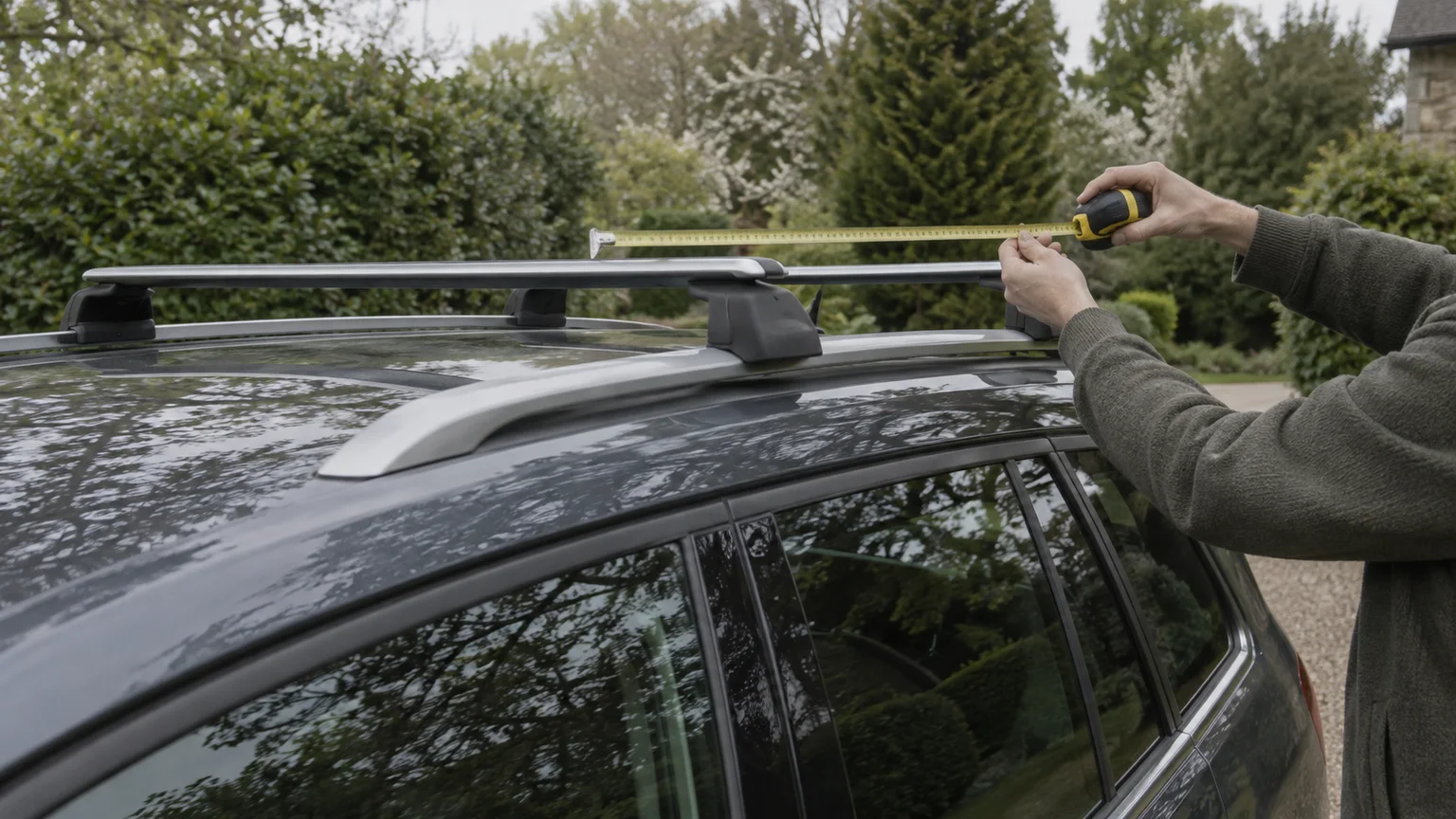
A long box can sit in the path of an opening hatch. Some manufacturers publish a front-clearance measurement from the front crossbar to the roof-and-hatch meeting point. Use the method for the exact box, rather than comparing overall car length.
For example, Thule Motion 3 XL specifies a front-clearance measurement greater than 1,324mm. That is one model's requirement, not a standard for other boxes. Check the actual hatch movement too, including any spoiler. Moving bars or the box is only an option within the positions allowed by both sets of instructions.
Check the permitted bar spacing and the crossbar dimensions against the box's installation instructions. Do not assume a clamp that closes around a bar has established an approved fit.
Count the complete roof load
Start with the dynamic limit: the allowance while driving. Include the full rack, empty box, everything inside it, and any other carrier with its load. Then check the rack system's own limit and the box's payload limit. The lowest applicable allowance governs what you can add.
Thule's load guidance sets out the subtraction of rack and empty-box weight from the vehicle limit. The calculator below also accounts for the rack's carried-load rating and other roof equipment.
Work out the weight
What is left for luggage?
Enter verified driving limits and weights in kilograms. The rack capacity field means the load carried above the rack, excluding the rack's own weight. If your instructions define the rating differently, confirm its meaning with the manufacturer first. Include any lower fitting-kit limit.
This calculation checks weight only. It cannot confirm vehicle fit, load distribution, mounting, clearance or the suitability of other equipment. Allow for weighing uncertainty and follow all equipment instructions.
For help choosing the inputs, read the worked roof-load calculation and the dynamic versus static explanation.
For a worked example, follow calculating roof load with bars and box. Read dynamic versus static limits if the handbook gives more than one figure. Then check whole-vehicle payload and axle limits separately; moving bags from the boot to the roof does not reduce the mass carried by the vehicle.
Measure the height you will actually drive with
Once everything is fitted, measure from level ground to the highest part of the setup. Write the figure somewhere you will see it before entering a car park, garage or height-restricted lane. Remember that a bike or boat may be taller than the box.
Book transport using the operator's current rules and your assembled height. Do not use the car's unladen brochure height plus an assumed box height as a guarantee of clearance. The total-height measurement guide explains the measurement; use the car-park barrier guide to plan the entrance and exit route. Check ferry bookings and LeShuttle booking details against the actual operator's current requirements.
Length and width need their own attention for projecting equipment. Use the UK overhanging-load measurement guide and the Highway Code's load-securing guidance as starting points for the applicable rules. A height measurement does not answer a projection question.
Before you set off
- Approved rack, correct kit and all fittings checked.
- Box clamps and spacing within the model's instructions.
- Hatch movement, roof-panel restrictions and total height checked.
- Complete roof load within the vehicle, rack and carrier limits.
- Luggage secured inside, lid closed and locked as instructed.
- Speed and recheck guidance taken from the exact equipment instructions and the conditions.
Plan driving and changes in conditions
Start with the pre-journey roof-equipment checklist and follow the equipment's recheck instructions. The speed-guidance article separates road limits, equipment limits and conditions; a published equipment maximum is not a target.
Read the strong-wind decision guide and snow-and-ice checks where relevant to the route. If motorway noise changes, use the installation and noise checks before buying another bar shape. For trip budgeting, the fuel-consumption and EV-range guide explains the limits of applying one published result to another car. Check insurance questions with your own insurer before relying on a general answer.
Useful next steps
Choose roof bars before comparing roof boxes. For a mixed load, read the carrying-system checks. Planning the off-car storage now can save an awkward problem at the end of a trip.
For a more detailed planning record, use the hatch-reference uncertainty examples, separate roof and vehicle-payload scenarios and energy-to-range sensitivity table. They keep measurement assumptions, published restrictions and calculated results separate so you can see what a positive number does and does not resolve.
Measure the complete carrying setup
Check the exact vehicle and rack, then work through the attachment, spacing and clearance questions in these guides.
Vehicle fit and physical measurements
Work through the complete installation, including any opening roof panel and rear spoiler.
- Will a Roof Box Fit My Car? A Complete Compatibility ChecklistFit guide
- Roof Bars and Panoramic Roofs: Permission and Clearance ChecksCompatibility guide
- Measuring Roof Box Clearance Above Your Boot and Rear SpoilerMeasurement guide
- Roof Bar Spacing for a Roof Box: Checking the Permitted RangeMeasurement guide
Prepare the load and the journey
Use the worked load guide with the calculator, then plan packing, departure checks, total height and the requirements of your actual journey.
Weight, packing and departure
Use the applicable driving limits and account for the complete vehicle as well as the roof.
- Calculating Roof Load: Including Bars, Box and LuggageWorked guide
- Dynamic vs Static Roof Load: Which Limit Applies When Driving?Explainer
- Vehicle Payload vs Roof Load: Accounting for Passengers, Luggage and EquipmentWorked guide
- How to Pack a Roof Box: Weight Distribution and Load RestraintPractical guide
- Roof Box and Roof Rack Pre-Journey ChecklistChecklist
Height, transport bookings and route restrictions
Measure the complete travelling setup before checking a particular operator or restricted entrance.
- Measuring Your Car’s Total Height with Roof EquipmentMeasurement guide
- Taking a Roof Box on a Ferry: Booking Height and Journey ChecksTravel guide
- Taking a Roof Box on LeShuttle: Booking and Height ChecksTravel guide
- Roof Boxes and Car Park Height Barriers: Planning for ClearancePractical guide
- Overhanging Roof Loads in the UK: Measuring Projections and Checking RequirementsRules and measurement guide
Driving conditions and ownership
Separate performance trade-offs, condition checks and the insurer's requirements.
- How Fast Can You Drive with a Roof Box? Finding the Applicable LimitsDriving guide
- Roof Box Noise on the Motorway: Checks Before Changing EquipmentTroubleshooting guide
- Roof Boxes, Fuel Consumption and EV Range: Understanding the Trade-OffsEvidence-led guide
- Driving with Roof Equipment in Strong Winds: Checks and Journey DecisionsDriving guide
- Roof Box vs Rear Cargo Carrier: Choosing Where to Carry Your LuggageComparison
- Roof Boxes and Carriers in Snow and Ice: Access, Inspection and Safe HandlingWinter guide
- Roof Bars, Roof Boxes and Car Insurance: What to Ask Your InsurerOwnership checklist
- Can You Take a Car Through a Car Wash with Roof Bars or a Roof Box?Practical guide
Frequently asked questions
What does the roof-load calculator check?
It compares luggage allowance under the vehicle roof limit, the rack’s carried-load rating and the box’s luggage limit using the figures you enter. It does not select a vehicle kit, verify installation, measure clearance or check whole-vehicle and axle weights.
Do bars and the empty box count towards roof load?
Yes. Account for the complete rack, feet and fittings, the empty box, other roof carriers and all carried equipment. Check each manufacturer’s rating definition so components are neither omitted nor counted twice.
Can I use a parked or static roof rating while driving?
No. Use the applicable driving or dynamic allowance for the exact vehicle and roof system. A separate parked-use rating does not increase the allowance for travelling and does not authorise a carrying arrangement.
How do I check whether the boot and a height barrier will clear?
Use the box maker’s hatch-clearance method, then check the actual approved installation. Measure the complete travelling height from level ground to its highest point. A shell-height figure alone cannot establish the car’s fitted height.