
Practical guide / Roof bars and compatibility
Roof Bars for Cars Without Rails: Naked-Roof Systems Explained
Find roof bars for a car without rails. Understand door-aperture clamps, vehicle-specific pads and kits, mounting positions and the checks before buying.
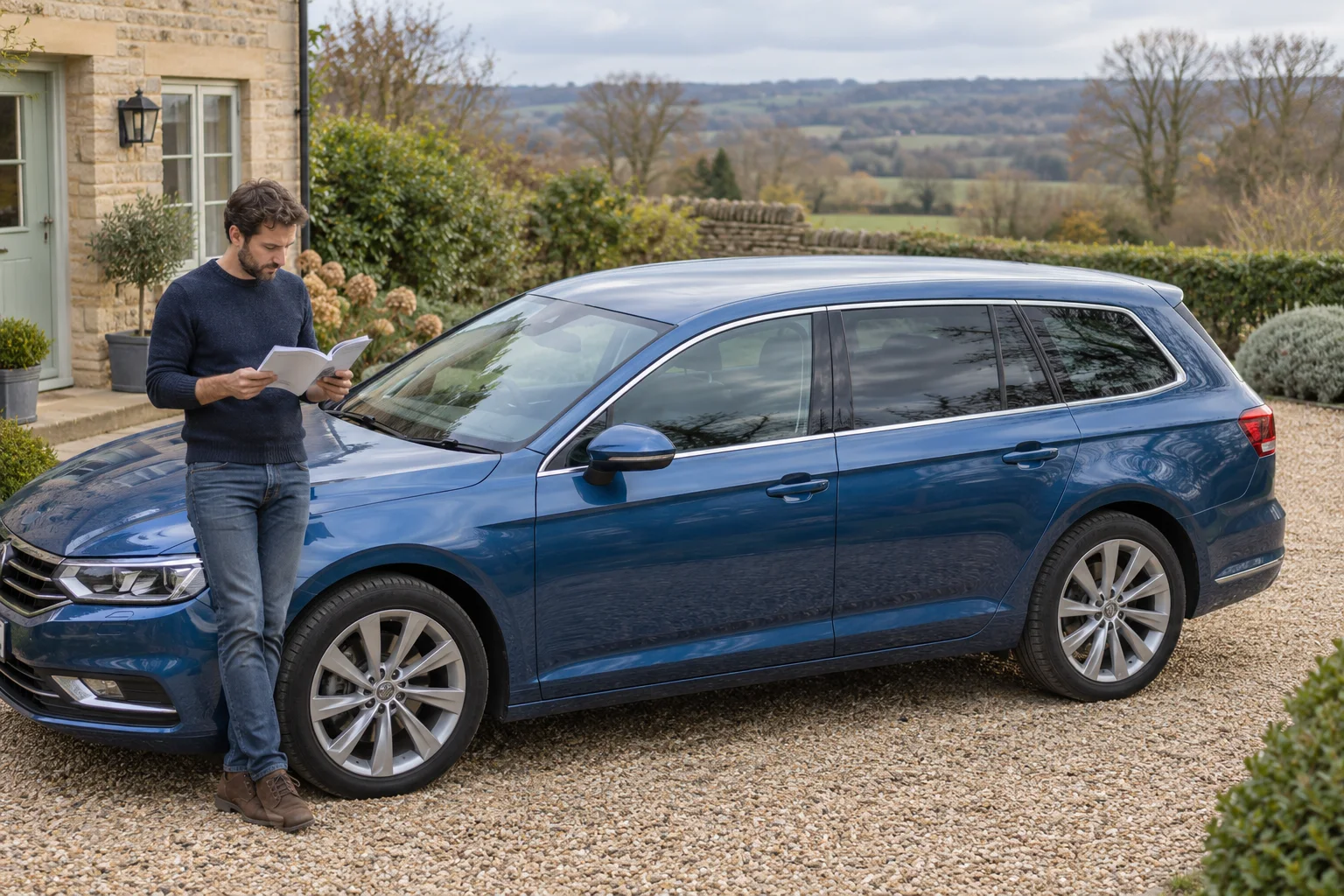
A bare roof needs an exact fit
A car without rails may use approved door-aperture clamps, concealed fixed points or no roof rack at all. Start with the actual vehicle and roof specification. Crossbars, feet and a generic clamp kit do not become compatible simply because they can be tightened together.
Establish whether the roof is truly naked
“No rails” describes what you can see, not necessarily how the car accepts a rack. Some cars have factory mounting points beneath designated covers or trim. Others use a manufacturer-approved clamp system that engages the door opening, with shaped pads resting on specified areas of the roof edge. A smooth roof can also have no approved carrying solution.
Read the handbook’s roof-carrier section and inspect only the locations it identifies. Do not pull at a decorative strip to search for a threaded hole. If the car has documented mounting points, follow the fixed-point guide instead of assuming door clamps are the intended method.
Record the exact body generation, year and roof option before opening the rack selector. A five-door hatchback and an estate carrying the same model name may require different systems. A photograph of another owner’s car is useful context for a question, but it cannot confirm that your roof has the same structure or permissions.
Understand what the clamps and pads actually do
In a vehicle-specific clamp arrangement, the feet support the crossbars and connect to the specified brackets. The shaped pads and brackets locate that assembly against the vehicle surfaces identified in the instructions. Their shape, orientation and position determine how the load reaches the car.
This explains why a clamp that appears to hook over a door edge is insufficient evidence of fit. Small differences in the roof contour or door aperture can change the contact and engagement. Do not substitute a nearby kit number, stack extra rubber under a foot or bend a bracket to make it reach. Those changes alter the approved arrangement.
Thule Evo Clamp 710500 is a four-foot family for approved cars without existing attachment points. It still needs the exact bars and vehicle kit shown by the selector. Use the manufacturer’s component information and the actual fit instructions to establish the complete system.
Select the vehicle-specific kit before shopping
Save the complete selector result, including notes and exclusions. Compare it with the handbook and actual roof. If the exact car or roof option is missing, ask the maker or an experienced fitter to resolve it. Choosing the nearest model from a dropdown is not a way to create permission.
Check the code on the supplied packaging and parts before installation. “One size” on a retailer listing describes the selected product variant; it does not mean one kit fits every naked roof. Retain the instructions for the kit as well as the feet, because the vehicle measurements may be in a different booklet from the general assembly sequence.
Choose bars that belong to the approved system
Once the attachment is confirmed, choose only the bar models and lengths allowed for it. A longer bar is not automatically an upgrade for carrying a bike beside a box. Its mounting range, permitted overhang and relationship to the feet must remain correct.
If the chosen box clamps around the bars, compare its approved bar profile and clearance underneath. If you plan T-track equipment, verify the exact conversion. Our complete-system buying guide explains how to build a full basket without confusing bars with a complete rack.
Follow the prescribed positions around the door openings
Naked-roof fitting instructions can specify measurements from a reference such as a door edge, together with front/rear part positions and bar settings. Use the diagram’s reference exactly. A distance measured from the windscreen instead of the identified door feature can place the pad on a different part of the roof.
Do not slide the bars rearwards because the roof looks flatter, or forwards because the box would otherwise touch the hatch. First establish whether the kit allows any adjustment at all. Where positions are prescribed, the accessory has to suit those positions. The bar-spacing guide explains how to compare the available spacing with a box’s range.
Clean and inspect the contact areas as the maker directs. Confirm that pads lie correctly and every bracket engages its intended location. Follow the exact tightening sequence and tool or torque indication. A general number from an online discussion is not a substitute for the supplied instructions.
Check doors, seals and any opening glass
After the permitted assembly is fitted, check the vehicle functions identified by the instructions. Door closure and seal contact deserve attention because the attachment is near the aperture. Unexpected distortion, a trapped seal or an unevenly seated foot needs resolving before loading, not compensating for with extra force.
A glass-roof option needs a separate check. Permission to mount the rack does not necessarily mean an opening panel can be operated beneath it. Accessories and clamps may project below the bars, so inspect the whole combination. Use the panoramic-roof guide before attempting any movement whose clearance is uncertain.
For a leased or modified car, resolve the actual roof configuration and permitted attachment through the relevant vehicle information. A kit approved for an unmodified body cannot automatically account for replacement trim, altered rails or a different roof assembly.
Account for the complete load and the day-to-day use
The vehicle’s dynamic roof allowance includes bars, feet, kit, carriers and the load. Weigh or obtain reliable weights for the whole rack; the bar pair alone is not the rack weight. Apply any lower rack, kit or carrier limit to the items it governs. The calculator helps once those figures are established.
For a family holiday, measure the luggage before committing to a shell. A box that carries a folded pushchair must accommodate its wheels and rigid parts around the mount intrusions, while the car still needs room for accessible travel essentials. The capacity guide helps separate a volume label from a useful packing fit.
Finally, consider fitting and storage effort. Keep labelled front/rear parts, small fasteners and the correct tools together when removing the rack. Before each reinstallation, inspect the pads, brackets and vehicle contact surfaces and follow the maker’s checks again. An old positional mark can help you find the reference, but it does not replace measurement or the current instructions.
Fit guidance and listing packages checked October 2026 using Evo Clamp information, its assembly instructions, Kit 145026 information and the exact-vehicle selector.
Frequently asked questions
Can a car without rails take roof bars?
Some can use a vehicle-specific clamp system or concealed fixed points, while others have no approved solution. Confirm the exact body, year and roof in the vehicle and rack instructions.
Do clamp-on roof bars damage door seals?
An approved system depends on the exact clamps, pads, positions and installation method. Incorrect parts or fit can cause problems; inspect contact areas and seals and resolve any interference before use.
Is a fitting kit the same as a foot pack?
No. Feet connect the bars to the vehicle-specific attachment hardware. The kit provides the specified pads and brackets or other interface parts; neither normally supplies the two crossbars.
Can I move naked-roof bars to clear the boot?
Only within positions expressly allowed by the exact fitting instructions. Many clamp kits prescribe reference measurements; hatch clearance does not justify sliding them onto a different area of the roof.
Can I use a kit from the previous model year?
Only if the current manufacturer fit result and instructions confirm that exact kit for your car. A model name or registration year alone does not establish the body generation and roof configuration.