
Accessory guide / Packing, storage and care
Roof Box Luggage Straps: Restraint Points and Compatible Replacements
Identify roof-box restraint points and the correct replacement straps. Separate internal luggage restraints from external load straps and check the exact box parts.
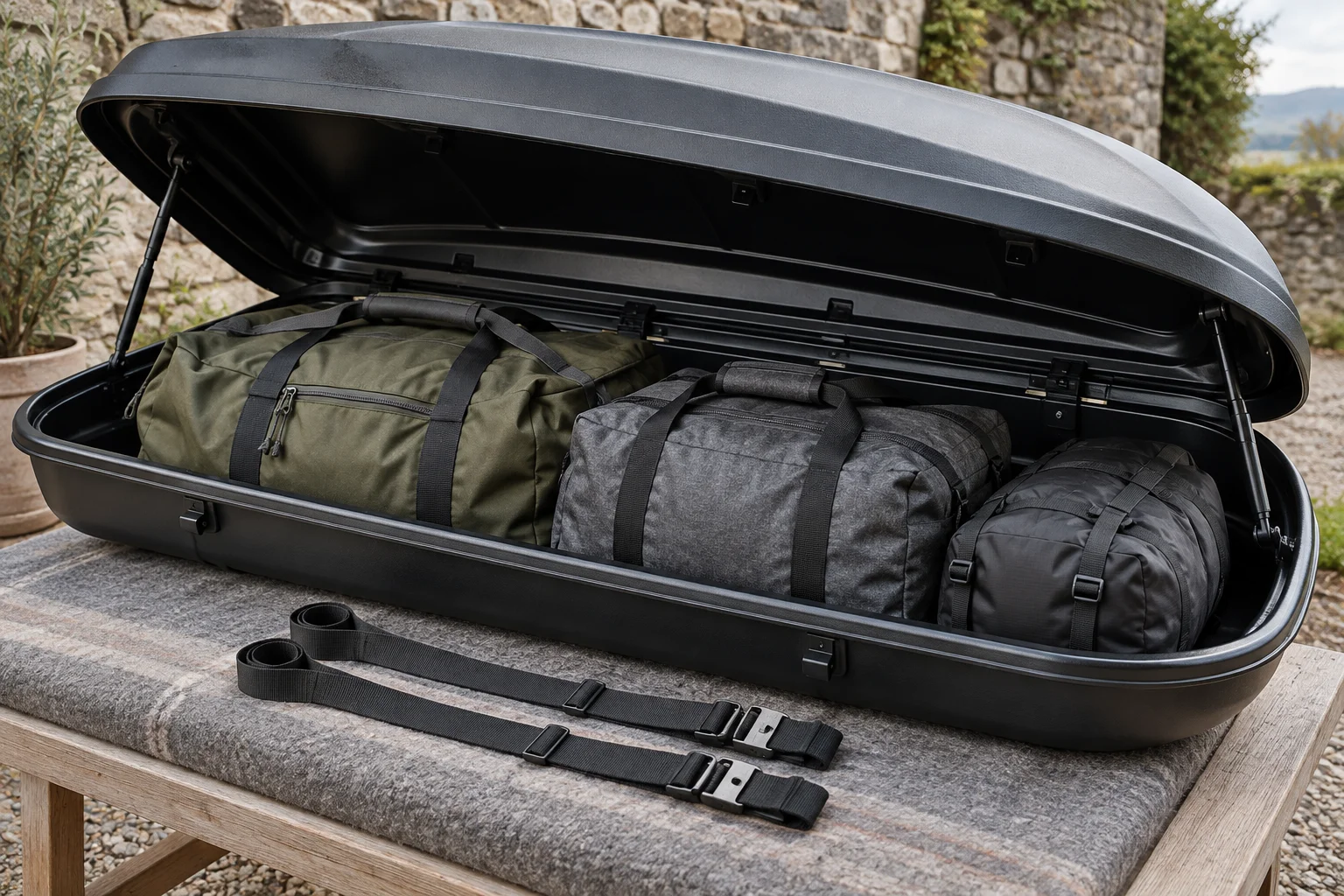
Replace the restraint, not just a length of webbing
Use the exact box instructions to identify luggage anchors, strap routing and compatible replacement parts. The buckle, webbing and attachment method work as a system. An external roof-load strap is not automatically a substitute for an internal box restraint.
Identify the exact box before ordering parts
Read the model label and record the generation and any relevant size code. Two boxes with a similar family name can use different mounts, straps or internal arrangements. A seller’s description such as “fits most roof boxes” is not a manufacturer compatibility result.
Obtain the instruction sheet and parts diagram for the actual unit. Identify the restraint component by its original part number where one is supplied. If that reference is missing, send the manufacturer or authorised service route the box identity and clear details of the existing system before choosing a replacement.
The second-hand inspection guide is useful when straps or hardware have already been mixed between boxes. A complete-looking set of loose parts does not establish that they belong together.
Distinguish three different jobs inside the shell
The box-to-bar mounts attach the shell to the vehicle rack. Luggage restraints secure the contents within the box. Hinges, lid lifters and locking parts operate or close the shell. These functions remain separate even where the components are close together.
Only use the restraint points identified by the exact instructions. Do not wrap a strap around a mounting knob because it is convenient, attach to a lid lifter or assume a moulded recess is a rated anchor. The fact that a strap can pass through a hole says nothing about the load that area is designed to accept.
Keep the original route visible in your packing plan. A replacement must work with the existing approved anchors and buckle arrangement, not require you to invent new points or rearrange the shell’s hardware.
Check the complete strap and buckle specification
Length is only one part of the decision. The webbing width, buckle type, attachment ends, adjustment range and any specified protective pieces matter too. A wider or stronger-looking strap can be incompatible with the original slot or put force into the wrong part of an anchor.
Compare the supplied part with the maker’s reference before fitting. A general lashing-capacity marking on an external strap is not a roof-box luggage allowance, and the box’s own payload rating does not authorise any restraint with an equal number on its label.
| Item | Evidence to find | An unsuitable shortcut |
|---|---|---|
| Box identity | Exact model/generation and manual | Ordering by approximate shell length |
| Part | Original replacement reference or written maker confirmation | Choosing a visually similar buckle |
| Anchor interface | Specified ends and attachment route | Using hinges or mounts as new anchors |
| Webbing and adjustment | Required width, length and operating range | Assuming longer or thicker is always better |
| Condition | No damaged webbing, buckle or shell anchor | Using extra tension to hide wear |
If a listing does not identify the required part accurately, resolve that before purchase. It is better to obtain the correct original component through the maker’s parts route than to fill a shopping basket with an unverified internal replacement.
Keep external load straps in their own category
External straps can be appropriate for particular sports carriers where their manuals specify that type. That does not make them interchangeable with an internal luggage system. The anchor geometry and intended route can be entirely different.
Do not run a strap around the outside of a roof box as a substitute for a failed lock or missing internal restraint. The lid, mounts and load still need their original functions to work correctly. A damaged closing system requires the manufacturer’s solution before travel.
Inspect the original restraint before every packing session
Check the webbing along its length, including the areas that pass through a buckle or bend at an anchor. Look for cuts, abrasion, fraying, heat damage, contamination and stitching problems where relevant. Inspect the buckle and the shell’s restraint points too; a sound strap cannot compensate for a damaged anchor.
Follow the maker’s replacement criteria rather than trying to judge a remaining safe percentage of damaged webbing. Do not knot a damaged section, sew in a patch or substitute a different buckle unless the manufacturer explicitly supplies an approved procedure for that exact system.
If an anchor has cracked, lifted or become loose, stop using it and obtain advice on the actual shell or fitting. Drilling a fresh hole changes the load path and is not a routine strap replacement.
Pack so the required route remains usable
Keep the anchors and adjustment areas accessible as you add luggage. Place the load within the supported area and complete the fastening sequence in the order shown by the instructions. Avoid trapping the webbing under a rigid case or putting a buckle where it interferes with the lid.
Do not rely on compression from an overfilled box. If the bags prevent normal strap adjustment or lid closure, repack within the permitted arrangement or reduce the load. The packing guide develops the distribution and securing checks.
Confirm closure and keep a record of replacements
After restraining the luggage, check that straps and handles are clear of hinges, lid edges and locking points. Close and lock normally, remove the operating key as instructed and perform the required departure checks. Repeat the inspection after a load change rather than assuming a previously correct route remains correct.
Record the replacement part number, box model and the instructions used, keeping spare original components with the box. This makes the next replacement and any future second-hand sale clearer. Store webbing dry and protected according to its care instructions.
For a missing or uncertain part, use the manufacturer’s identification service. Use the exact manufacturer-listed internal part; the external strap above is not an assumed substitute.
Sources checked October 2026: Thule spare parts and instructions, roof-box safety and original-parts guidance and Thule 523000 external straps. Follow the exact box’s restraint drawings.
Frequently asked questions
Can I use any luggage strap inside a roof box?
No. Match the exact box’s strap, buckle, width, length and anchor arrangement. A generic strap’s length or strength claim does not establish compatibility with the original restraint system.
Are the metal box-mounting points luggage anchors?
Only use points identified as luggage-restraint anchors in the exact instructions. Mounting clamps, hinges, lid lifters and convenient-looking holes have different jobs and must not be treated as substitute anchors.
Can I use Thule 523000 as an internal replacement?
It is a general external load-strap product, not a verified universal internal-box replacement. Use it only where the exact equipment instructions specify that arrangement; obtain model-specific internal parts separately.
Do packed bags need restraint if they fit tightly?
Follow the box’s specified restraint method even when the bags appear snug. Packing pressure, friction and the closed lid are not substitutes for the original securing arrangement.
What should I do if a restraint point is damaged?
Stop using that arrangement and ask the manufacturer about the exact damaged part and approved repair or replacement. Do not drill another hole, move the strap to a hinge or compensate with extra tightening.