
Driving guide / Loading, driving and travelling
How Fast Can You Drive with a Roof Box? Finding the Applicable Limits
Find the applicable roof-box driving limit from your vehicle, rack, box and road rules. Includes UK examples, wind checks and manufacturer references.
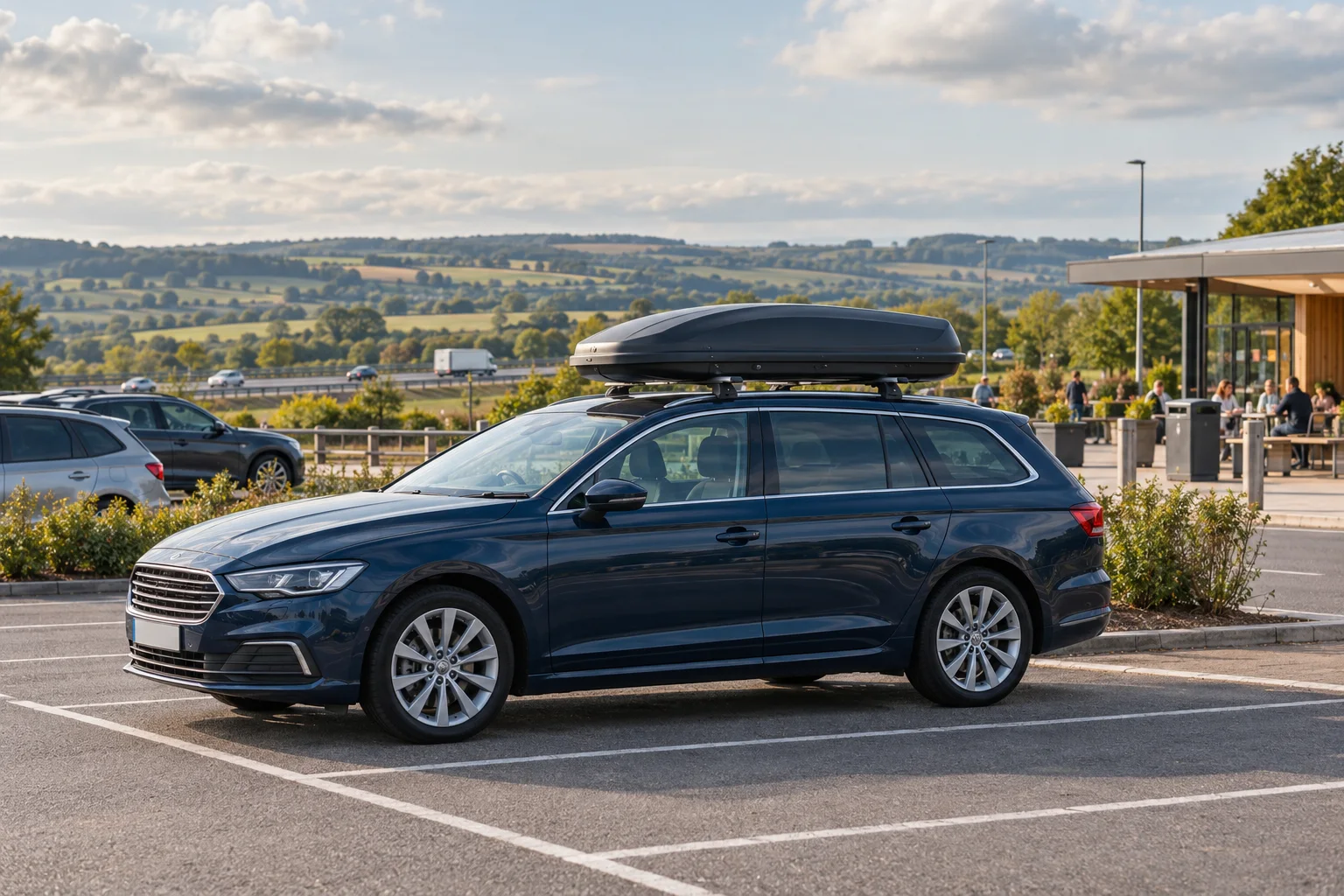
Use the applicable limits, then allow for conditions
Observe the road limit for your actual vehicle and any lower restriction from the vehicle, complete rack, kit, box or other carrier. Reduce speed further when conditions require it. A manufacturer’s 130km/h figure is not a UK speed limit or permission to travel at that speed in wind or poor conditions.
Start with the instructions for the whole setup
Find the exact manuals for the vehicle, rack, vehicle kit, roof box and any other carrier. A roof box installed beside a bicycle is a different combination from the same box alone. Record every relevant operating restriction and resolve differences before travel, rather than using the largest number advertised for any one component.
The cited current Thule roof-box safety guidance and the Force 3 example specify a maximum of 130km/h. That is approximately 81mph when converted, but the equipment restriction is not an instruction to drive at that speed. Another product, vehicle combination or accessory can impose a lower limit.
Do not copy a generic “80mph with roof boxes” answer into the driving plan. The permission comes from the actual equipment and applicable road rules. Loading correctly, securing everything and keeping within the driving roof allowance remain necessary at any speed, including a short local journey.
Apply UK road limits to the actual vehicle and road
For an ordinary car not towing, the national speed limit is normally 60mph on a single carriageway and 70mph on a dual carriageway or motorway, subject to the applicable signed and local limits. The current GOV.UK table sets out vehicle classes and exceptions. Variable limits and other lower restrictions still apply.
A roof box alone does not turn a car into a towing combination. If you also tow a trailer or caravan, however, use the applicable towing rules and equipment instructions as well. A van, motorhome or other vehicle may have different legal limits from an ordinary car; do not select a limit based only on how similar it looks to one.
Keep the units clear. A number expressed in kilometres per hour is not the same number in miles per hour. On a continental journey, check the actual country, road and conditions, including any rules specific to your vehicle and combination. Do not assume a motorway abroad removes the equipment maximum.
Treat a permitted maximum as a ceiling
A legal or equipment maximum does not establish a suitable speed for every moment of the journey. Wind, visibility, road surface, traffic and the load all affect the driving judgement needed. Plan extra time rather than treating arrival time as a reason to remain close to a headline limit.
| Check | Question to answer | Example |
|---|---|---|
| Road and vehicle rules | What legal limit applies here to this vehicle and combination? | A signed 50mph restriction can be below the normal motorway maximum |
| Equipment restrictions | What is the lowest applicable operating limit? | A lower carrier restriction cannot be replaced with another component’s 130km/h figure |
| Current conditions | Does this require a lower speed or a change of plan? | Wind, poor visibility, surface conditions or an equipment concern |
If strong conditions make the journey unsuitable for the complete carrying setup, reassess the route or timing. Do not invent a universal wind-speed threshold for all cars and boxes. Use the vehicle and equipment guidance and current travel information for the situation you face.
Secure the load before considering road speed
Work through the load calculator with verified driving limits, then follow the packing and restraint guide. The car’s overall payload and relevant axle limits also remain in force; the roof calculation is only one part of loading the vehicle.
Keep every required mounting component present and correctly engaged. A tightening indication belongs to one mechanism’s sequence, rather than proving the entire carrying system is correct. Before departure, inspect the vehicle-to-rack attachment, box-to-bar mounts, internal restraint and closure separately.
Account for the way the equipment changes the car
A rack and box add height and change airflow around the car. The manufacturer’s guidance also highlights changes in handling with roof equipment, particularly when loaded. Leave the space and time needed to drive smoothly and follow the vehicle’s loaded-tyre-pressure instructions.
Do not use a quieter setup as evidence that a higher speed is acceptable. A whistle can disappear while a load remains insecure, and a securely installed system can still produce wind noise. Noise level is not a speed rating or a substitute for inspecting the equipment.
If you are choosing between profiles, use our aero versus square comparison for mounting and practical trade-offs. Choose an approved system for the car and carriers, rather than buying a shape in the expectation that it permits a particular cruising speed.
Respond to new noise or movement safely
A new rattle, knock, flap or unexplained change in noise needs attention. Do not lean out to inspect it or repeatedly increase speed to find the point at which it appears. Use an appropriate safe stopping place to inspect the complete setup. If it appears insecure or the situation is urgent, follow the applicable breakdown or emergency guidance and obtain help.
During the stationary inspection, check mounting security, closure, restraints, loose strap ends and damaged or missing parts using the actual instructions. Do not keep driving with an unresolved attachment problem simply because a lower speed makes the noise less obvious.
The motorway-noise guide provides an inspection sequence. It prioritises secure equipment and correct assembly before deciding whether another bar or box would be useful.
Plan stops and checks into the journey
Follow the rack and box makers’ recheck requirements rather than inventing a mileage that suits every product. Include checks after installation and at suitable stops, after changing the load and when an unexplained symptom appears. If the car has been left unattended, inspect the relevant locks and attachment again before continuing.
Keep the correct key and instructions accessible. A useful break is also a chance to confirm the next parking or booking restriction, especially when the route includes a ferry terminal, LeShuttle or a hotel garage. The roof box does not stop affecting height because the motorway section is finished.
Remember the return trip. Purchases, wet equipment or a bike moved from another vehicle can alter the carrying setup and its load. Repeat the affected checks rather than treating the original outbound calculation as a permanent approval.
Keep a simple record of the applicable restrictions
Record the exact car and roof, rack and kit, box, any other carriers and the relevant manual references. Note the lowest equipment restriction alongside the need to obey road limits and adapt to conditions. This makes it easier for another driver to understand the setup without relying on a remembered “80mph” rule.
Finish with the pre-journey checklist and height-measurement guide. Appropriate speed cannot compensate for an overloaded roof, an unapproved attachment or a height conflict at the destination.
Driving guidance checked October 2026 using GOV.UK speed limits, Thule roof-box safety instructions and Force 3 instructions. Confirm the exact vehicle and equipment restrictions before the journey.
Frequently asked questions
Is 80mph the UK speed limit with a roof box?
No. A manufacturer figure near 80mph is not permission to exceed UK road limits. Use the applicable legal limit and any lower equipment restriction, and reduce speed further for conditions.
Does every roof box have a 130km/h limit?
No. Read the actual vehicle, rack, fitting-kit and box instructions. The cited Thule examples show 130km/h; another product or combination can impose a lower restriction.
Does a roof box automatically count as towing?
A roof box by itself is roof-carried equipment rather than a trailer. If you also tow, the towing rules for the actual vehicle and road apply as well as the roof-equipment limits.
Can an empty roof box be driven faster than a loaded one?
Do not assume that. The installed box and rack still have their applicable restrictions and affect height and airflow. Use the actual instructions whether the box is full or empty.
Should I keep going if the box starts making a new noise?
Do not investigate while driving or keep increasing speed to diagnose it. Reach an appropriate safe stopping place and inspect attachment, closure, restraint and equipment condition before continuing.