
Build the foundation
Roof bars
Find the right roof-bar system for your car. Understand roof types, feet, fitting kits, aero and square bars, mounting, clearance and reuse.
The short answer
Start with the approved complete system for your exact vehicle. A pair of crossbars alone may still need feet and a fitting kit, and the lowest permitted limit governs the load.
Roof bars run across the car; roof rails usually run along it. Rails alone do not provide a complete carrying platform for a roof box. A suitable rack joins the crossbars to the car using the correct feet and, where required, a vehicle-specific fitting kit.
Already know your car?
Use the manufacturer's vehicle selector, then confirm every part number and restriction.
Identify the roof, then verify the fit
A gap under a rail suggests raised rails; a rail sitting against the roof suggests flush rails. Fixed points may be beneath covers, while a naked roof has no obvious rail or mounting point. These descriptions help you start a fit search. They do not tell you which kit to buy.
See the four roof types, and select the exact make, model, year, body style and roof configuration in the rack manufacturer's fit tool. Similar-looking roofs can require different clamps or pads. If your configuration is missing or unconfirmed, ask the manufacturer or a fitting specialist rather than substituting another model's kit.
Match the guide to the roof you actually have
For a plain roof, use the naked-roof system guide; for longitudinal rails, start with raised versus flush rails. A covered mounting socket belongs with the fixed-point checks. Older guttered roofs need the rain-gutter system guide, including the correct foot height and vehicle permission.
Factory bars also need their own accessory checks. Compare factory crossbars with aftermarket systems before assuming a larger bar rating would raise the vehicle allowance. For bars that stow along the roof, use the integrated fold-out crossbar guide. Their permitted positions and profiles may limit the box or carrier you can attach.
A glass roof is a separate permission and clearance question. The panoramic-roof guide explains why a successful rack-selector result still needs its roof-panel notes and operating restrictions checked. Keep the final parts list and instructions together so a later replacement can be matched to the actual system.
Buy the complete system
Check what the listing includes. A pair of bars may be sold separately from the feet, locks and fitting kit. Compare the complete fitted package, not the bar price alone.
Keep the instructions for all parts. They determine the mounting positions, bar spacing, tightening method, any torque settings and the load allowance for that combination. A bar's headline rating may be higher than the vehicle or fitting kit allows.
Compare roof-bar options
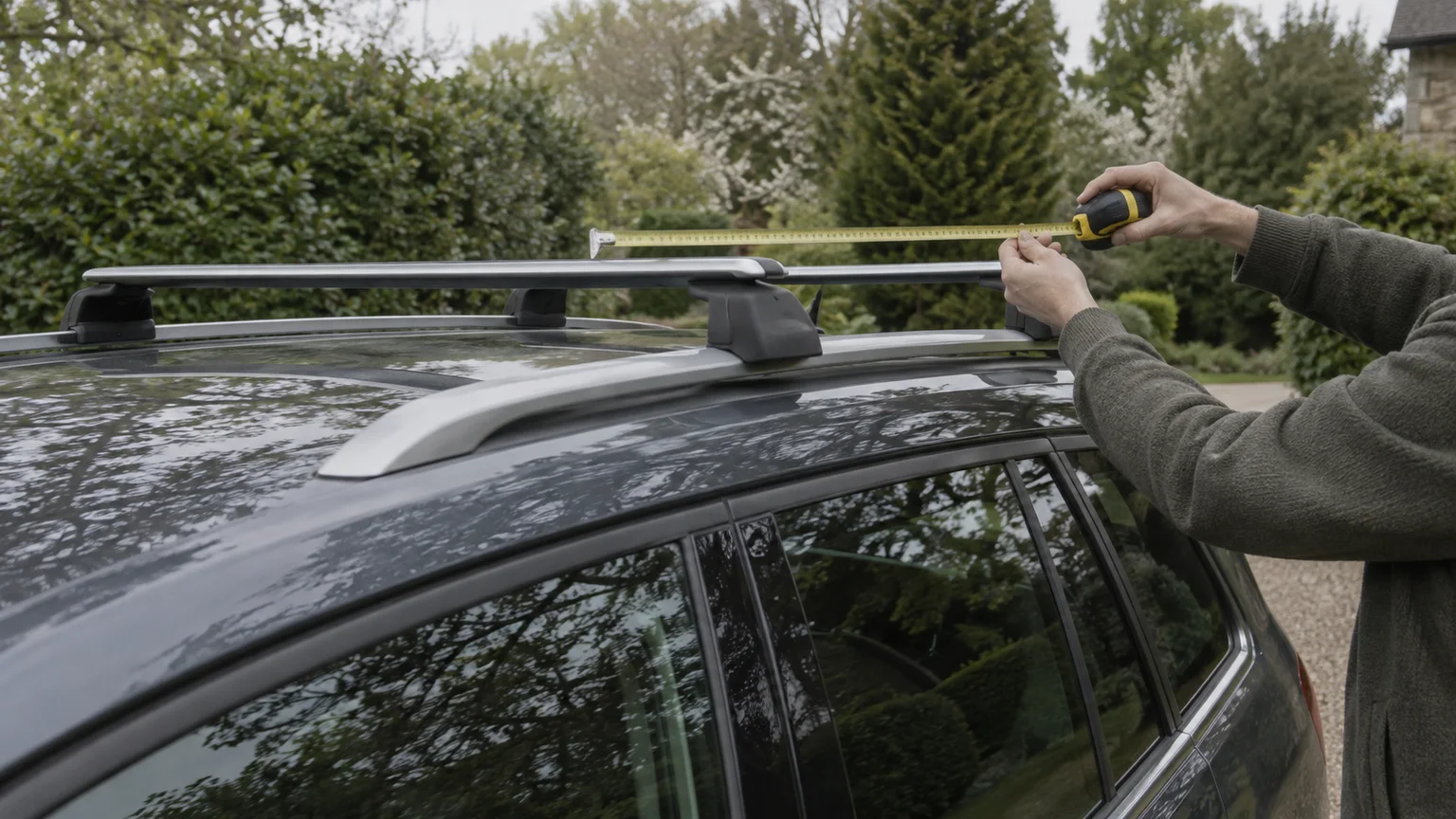
Choose the system first, then the correct bar length. These listings cover different profiles and package types; their lengths are examples of exact variants, not recommendations for every car.
Bar shape and usable space
Aerodynamic bars, square bars and low-overhang systems each have different practical trade-offs. The important question is whether your intended accessories can mount where they need to.
- Check whether the accessory uses a clamp around the bar or an adapter in a T-track.
- Measure usable loading width, including the space occupied by feet and clamps.
- Check permitted overhang and the accessory's clearance around the bar feet.
- Look up the complete system's capacity before combining a box with bikes or boards.
An accessory advertised as compatible with an aerodynamic bar is not automatically compatible with every aerodynamic profile. Use the aero versus square-bar comparison for the profile trade-offs and T-track versus clamp mounting for the hardware decision.
A low-overhang system can leave less accessible mounting width even when its overall length appears sufficient. The WingBar Evo versus WingBar Edge comparison separates bar length from usable carrying width and explains why front and rear Edge sizes may differ. Before mounting a box, check its permitted bar-spacing range independently.
Before the first load
Follow the vehicle-specific instructions for fitting and rechecking. Do not borrow a torque value or bar-spacing figure from a different kit. Confirm any restrictions on opening a sunroof or panoramic panel with the complete setup installed.
Once you know the rack weight and its permitted carried load, use the luggage-allowance calculator. Then check the box or sports carrier instructions separately.
Use the worked bar-spacing intersections to see how a box range, a vehicle restriction and another accessory can leave a much smaller common interval. The examples distinguish fixed positions from ranges and show when the numerical overlap disappears. The actual vehicle kit still decides which mounting positions are permitted.
Manufacturer starting points
Thule explains the parts of a roof-rack system, and its UK vehicle selector is a starting point for exact part selection. A confirmed listing still needs to agree with your vehicle's handbook and the supplied instructions.
Product specifications and listing variants checked October 2026. Confirm the selected package against the manufacturer’s exact-vehicle fit result.
Detailed roof-bar and compatibility guides
Check the exact vehicle and rack, then work through the attachment, spacing and clearance questions in these guides.
Already have a rack? Start with moving bars to another car, buying used components and finding exact replacement parts. Check fold-out factory crossbars separately from ordinary raised rails.
Identify the roof and complete rack
Different attachment types need different approved systems; start with the actual vehicle.
- Choosing Roof Bars: Bars, Feet and Fitting Kits ExplainedBuying guide
- Roof Bars for Cars Without Rails: Naked-Roof Systems ExplainedPractical guide
- Raised Rails vs Flush Rails: Identifying Your Roof TypeIdentification guide
- Fixed-Point Roof Bars: Finding the Correct Mounts and Fitting KitPractical guide
- Roof Bars for Vehicles with Rain Gutters: Choosing the Correct SystemBuying guide
- Integrated Fold-Out Crossbars: Checking Roof Box and Carrier CompatibilityCompatibility guide
Accessory mounting and clearance
Check the bar profile, permitted spacing and the space around the fitted equipment.
- Aero Roof Bars vs Square Bars: Noise, Mounting and AccessoriesComparison
- T-Track vs Clamp Mounting for Roof AccessoriesComparison
- Roof Bars and Panoramic Roofs: Permission and Clearance ChecksCompatibility guide
- Will a Roof Box Fit My Car? A Complete Compatibility ChecklistFit guide
- Measuring Roof Box Clearance Above Your Boot and Rear SpoilerMeasurement guide
- Roof Bar Spacing for a Roof Box: Checking the Permitted RangeMeasurement guide
Reuse, compare and maintain a system
A new car or accessory can change which existing components are usable.
- Moving Roof Bars to Another Car: What Can You Reuse?Compatibility guide
- Buying Used Roof Bars: Checking for Missing Feet, Kits and PartsInspection checklist
- Factory Crossbars vs Aftermarket Roof Bars: Which Suits Your Equipment?Comparison
- Thule WingBar Evo vs WingBar Edge: Carrying Width, Fit and Practical DifferencesProduct comparison
- Replacement Roof Bar Parts: Matching End Caps, Rubber Strips and Contact PadsAccessory guide
Frequently asked questions
What is the difference between roof rails and roof bars?
Rails usually run along the vehicle; bars run across it to support carrying equipment. Raised rails, flush rails, fixed points and naked roofs need different attachment arrangements. Identify the actual roof before choosing components.
Does a pair of bars include everything needed to fit them?
Not always. Modular systems can need separate feet and a vehicle-specific fitting kit. Some listings contain one bar, a bar pair, feet or a kit only. Compare the complete approved parts list and package contents before ordering.
Can I reuse my bars on another car?
Only if the new vehicle’s exact fit result permits those bars and the required matching feet and kit. Inspect condition, bar length, roof restrictions and accessory clearances again. The same brand or a similar car does not establish compatibility.
Will aero bars always be silent?
No. Noise depends on the complete installation, channel strips, caps, position, accessories and driving conditions. Investigate a new sound through the prescribed condition checks rather than treating an aero profile as a promise of silence.