
Compatibility guide / Roof bars and upgrades
Moving Roof Bars to Another Car: What Can You Reuse?
Check which roof bars, feet and fitting kits can move to your next car. Compare exact part numbers, system generations, accessory fit and replacement costs.
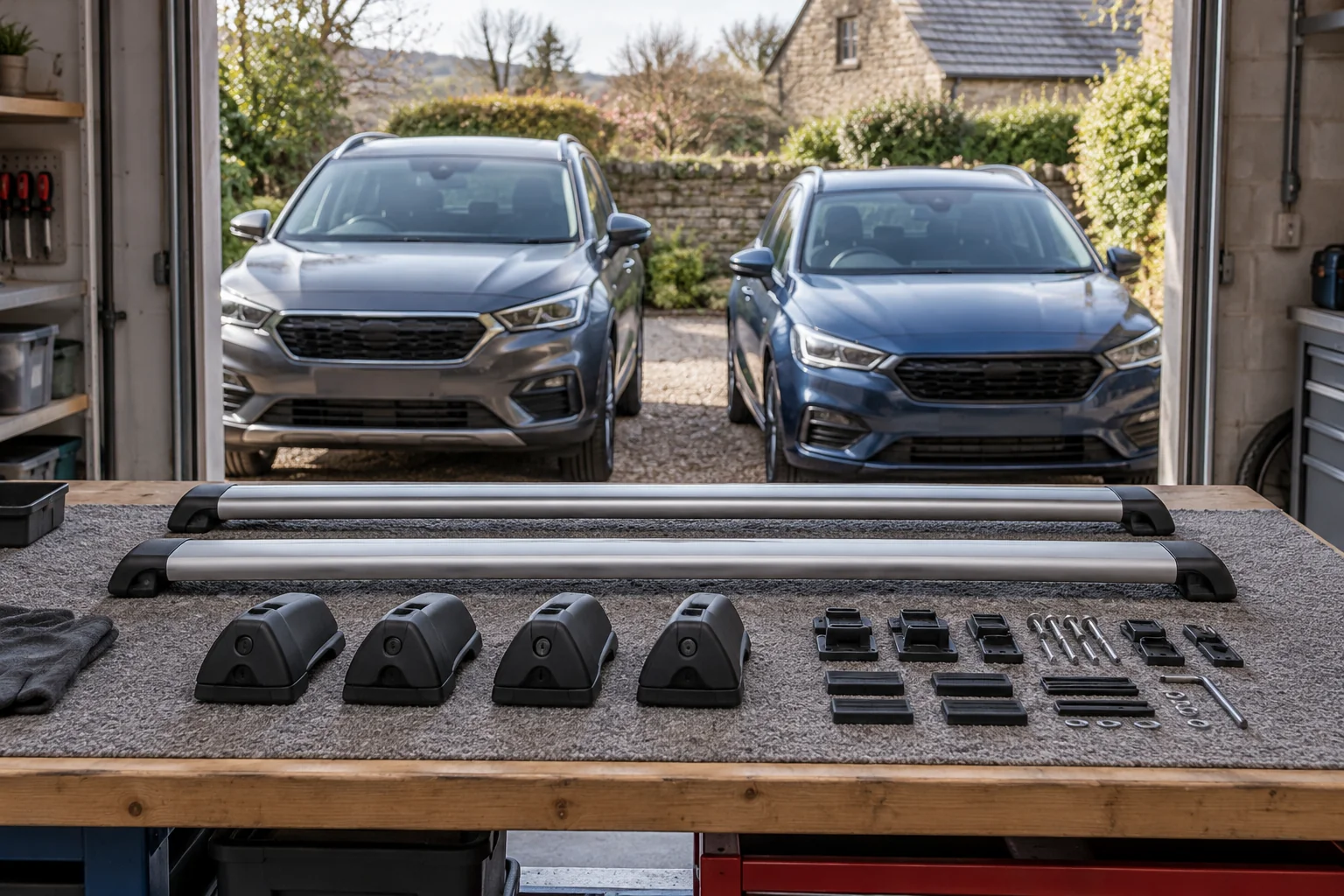
You can sometimes move roof bars to another car, but treat the change as a new vehicle fit. Keep a component only when its exact identity, condition and connection match the new approved combination. The result might be a new fitting kit, different feet, different bar lengths or an entirely different system.
A useful starting point is to separate what you own from what the next car requires. That makes the decision clearer than asking whether a rack is “universal” and can prevent buying a cheap-looking replacement that still needs several expensive pieces.
Identify the new car before dismantling the old system
Record the make, model, body style, generation, model year and actual roof configuration. Check roof-carrying permission and any glass-roof restrictions in the handbook. A registration lookup is a starting aid; compare its result with the physical vehicle and the equipment described in its documentation.
Look for raised or flush rails, fixed points, rain gutters or a naked roof. Even a change between two rail-equipped estates can require a different attachment. Decorative trim and a channel along the roof are not proof that a clamp can bear there.
Keep the old rack supported while identifying it. Photograph its labels and installation references before taking components apart. Record the front/rear arrangement, but do not transfer the old car's mounting positions to the next roof.
Make a component inventory with full part numbers
List both bars, every foot and the vehicle kit separately. Include shaped pads, brackets, covers, locks and any system-specific tools or inserts. Distinguish a moulded manufacturing mark from the part number used in the manufacturer's fit result.
| Component | Record | Reuse depends on |
|---|---|---|
| Crossbars | Family, generation and each length | Approved length and foot interface |
| Feet | Full pack number and revision | New roof attachment and bar system |
| Vehicle kit | Kit number, pads and brackets | Exact vehicle and system approval |
| Accessories | Carrier model and mounting hardware | New bar profile, positions and clearances |
| Locks and tools | Original system and supplied pieces | Documented compatibility and completeness |
An unreadable label is a reason to ask the manufacturer or a knowledgeable supplier for identification. A photograph of a similar foot in an online listing cannot establish its generation or the pieces hidden underneath.
Obtain the complete fit result for the next vehicle
Use the manufacturer's vehicle selector, then obtain the instructions for every specified part. Compare its complete parts list with your inventory. Mark each item as an exact match, a confirmed permitted alternative or a required purchase.
A change of roof type can change the feet even when the bars remain useful. Vehicle kits can contain different contact pads and brackets within the same broad system. Do not retain an old pad because it appears to sit flat or a clamp because its bolt reaches.
If the exact roof option is absent from the selector, resolve that gap before purchasing parts. A fit for a neighbouring model year or another body style is not a confirmed alternative.
Check system generations rather than relying on the brand
There are documented exceptions to simple rules about mixing generations. Thule's reuse guidance describes some Rapid/Evo bar and foot compatibility, while distinguishing older and current Edge systems and their vehicle kits.
That is a reason to ask a precise question: give the old bar number, foot number and kit number alongside the new vehicle details. It is not permission to combine any old and new parts with the same logo. A supplier's answer should identify the actual approved combination and any required additional pieces.
Avoid improvised sleeves, drilled holes, substitute bolts or extra padding to bridge an interface mismatch. A part that can be pushed into place has not necessarily made the intended structural connection.
Decide whether the existing bar length still makes sense
The approved system determines bar length and its permitted attachment range. Overall width is only one measurement: the underside slot, foot position and loading area also matter. Do not choose longer bars solely to make room for another carrier.
Check access to the accessory mounting controls at both ends. A foot positioned differently on the next car can obstruct a box clamp or reduce the space available for a bike carrier, despite the crossbars themselves being unchanged.
Inspect condition before investing in additional parts
Clean and inspect the old components as their instructions allow. Look for deformation, cracks, damaged threads, corrosion, missing hardware and degraded contact pieces. A sound top surface can conceal damage around the underside connection or a clamping part.
If a component's history includes an impact, overload or unexplained movement, obtain an assessment before reusing it. A new fitting kit does not restore a damaged bar or foot. Our used-roof-bar inspection guide gives a more detailed inventory and condition checklist.
Recheck every accessory on the completed new rack
The new vehicle can alter the permitted bar spacing, hatch clearance and height above glass. Confirm the box or carrier's allowed bar dimensions and mounting range, then examine the entire underside hardware.
Recalculate the roof allowance using the weight of the complete new rack. If different feet or bars are required, an old calculation may no longer apply. Use the roof-load calculator with verified limits and weights; it cannot certify the physical installation.
Follow the exact new fitting and recheck sequence. Keep the instructions and a record of the final component numbers together, so the next removal does not become another identification exercise.
Compare the complete reuse cost with a new system
Add the required feet, vehicle kit, missing covers, approved adapters and any assessment costs. Compare that basket with an approved complete new system, rather than comparing just a bar-pair price. Factor in whether replacement parts and the correct instructions remain obtainable.
For example, keeping sound approved bars and replacing one vehicle kit can be straightforward. Keeping unidentified old feet while buying several missing pieces can be poor value, especially if the new roof still needs a different attachment.
Choose reuse when the evidence, condition and full cost support it. Choose replacement when the necessary combination cannot be established or the remaining components do not justify further investment.
Component guidance checked October 2026. Primary references: the linked Thule selector and reuse guidance, plus roof-rack safety instructions. This guide explains the decision process; the exact vehicle fit and supplied instructions govern the installation.
Frequently asked questions
Can I transfer a complete roof rack to another car?
Only if the rack maker confirms the complete combination for the new vehicle, including its exact roof option. Matching car names, rail appearances or overall widths do not establish that the old kit, feet and bars remain approved.
Are the crossbars usually the reusable part?
They may be, provided their model, length, attachment interface and condition match the new approved system. A reusable bar does not automatically make the existing feet or vehicle fitting kit reusable.
Can older Thule Rapid bars work with Evo feet?
Thule documents some Rapid and Evo bar/foot compatibility, but vehicle kits remain system-specific. Obtain confirmation for the actual parts and vehicle; the same rule does not make older and current Edge systems interchangeable.
Can I cut longer roof bars down for the next car?
Do not shorten or drill bars unless the exact manufacturer instructions expressly allow it. A different approved length may be required because the underside attachment range and structural details matter as well as total length.
Do I need to check my roof box again after moving the bars?
Yes. The new car can change bar spacing, usable width, roof clearance, hatch movement and roof allowance. Check the complete loaded arrangement again even when the box and bars are unchanged.