
Explainer / Loading, driving and travelling
Dynamic vs Static Roof Load: Which Limit Applies When Driving?
Understand dynamic and static roof loads, why a parked rating cannot set a driving allowance, and how to check your car, rack and box limits.
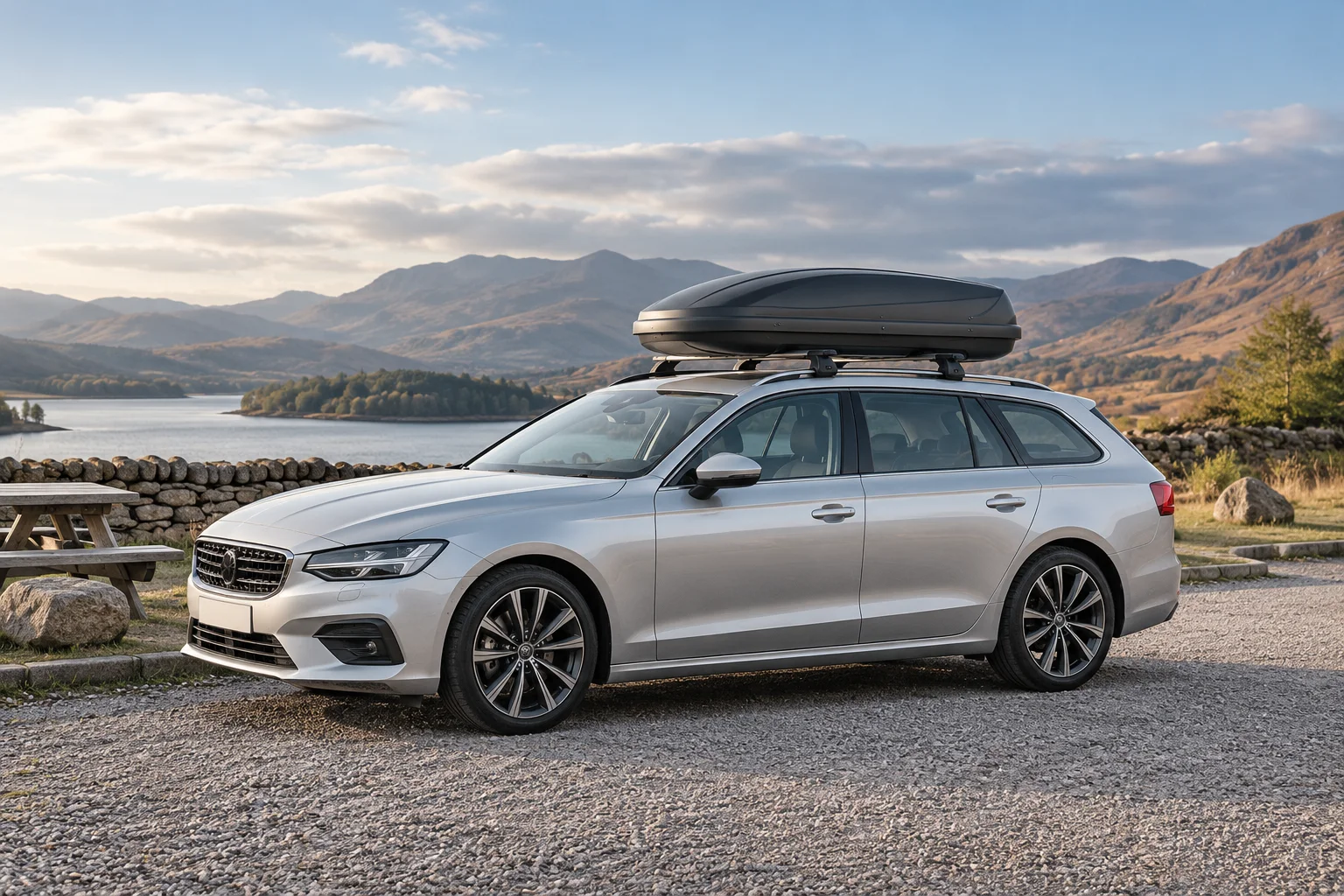
Driving needs the driving allowance
Dynamic roof load applies while the vehicle is moving. Static roof load concerns a parked condition for an explicitly permitted use. A larger static figure cannot increase the driving allowance for a roof box, rack or luggage, and it does not turn the box into a platform.
Calculate using verified driving limits →Understand what changes when the car moves
A parked car and a travelling car put different demands on roof equipment. Braking, cornering, bumps and wind act on the vehicle and load while driving. A weight the structure might support in one stationary application is therefore not a driving approval for a different carrying setup.
For a roof-box journey, start with the dynamic allowance specified for the exact vehicle and roof. Check the complete rack, fitting kit and box limits as well. Do not look for the largest number associated with the model name and assume it is the most generous usable capacity.
The distinction is particularly easy to miss when researching roof tents, where people may discuss a parked load including occupants. Those discussions do not establish a static rating for your car and do not authorise the same load on the road. A roof box’s shell, lid and mounting system have their own intended use.
Identify the operating condition in each source
Read the vehicle handbook’s roof-carrier section and any notes for the actual roof option. Record the wording around the number, not just the number itself. Ask the vehicle maker to clarify whether a stated capacity includes the rack and what roof configuration it covers if that is not clear.
Next check the complete rack instructions and vehicle-specific kit. A headline bar rating can be higher than a particular vehicle combination allows. Finally check the accessory’s own instructions, including its luggage limit and the weight of the empty equipment. Keep product shipping weight separate from installed equipment weight.
| Figure | What it concerns | What it does not establish |
|---|---|---|
| Dynamic vehicle roof allowance | Permitted roof load while driving on the specified vehicle | A universal fit or permission to exceed equipment limits |
| Explicit static allowance | A stated parked application and its conditions | A larger driving payload or permission to stand on a box |
| Rack/component rating | The load and definition specified for that assembly | The vehicle’s own roof or overall payload allowance |
| Box luggage limit | The contents allowed by the exact box | The amount left after rack and shell consume roof allowance |
Include the complete rack rather than only its bars
For the load calculator, obtain the complete installed rack weight and a clarified rack carried-load limit. Its field assumes that the carried-load figure excludes the rack’s own weight. If your source uses a different definition, resolve it before entering the value rather than subtracting parts twice or omitting them.
A roof type is not a load rating either. Raised rails can help identify which fit search to use, but their appearance does not tell you the permitted capacity. Fixed points, flush rails and naked roofs each require the same exact-vehicle verification. Glass roofs can also have specific restrictions that a generic model specification misses.
Apply the driving allowance to bars, shell and luggage
Imagine a hypothetical 75kg dynamic vehicle allowance with a 6kg complete rack and a 15.4kg planning weight for the box. With no other roof equipment, the vehicle constraint leaves 53.6kg for luggage. A lower rack, kit or box constraint can reduce that further.
Now suppose someone mentions a larger stationary rating for a different application. It does not alter the 75kg driving figure or the 53.6kg remainder. The journey still needs the dynamic allowance, even if the car will spend most of the holiday parked or only travel a short distance to the campsite.
Use the worked roof-load guide to compare the independent constraints and the calculator with verified inputs. Do not enter a static number in the vehicle field to make a desired luggage quantity produce a pass.
Avoid inventing a static multiplier
There is no general calculation such as “three times the driving limit” that can approve a parked roof load for every car, rail and rack. The permitted application depends on the vehicle structure, attachment, equipment and manufacturer conditions. An online rule of thumb cannot supply those permissions.
Likewise, a rack’s stationary strength claim cannot establish what the vehicle roof or fitting kit accepts. Each interface remains part of the system. If an intended parked use is outside the roof box’s instructions, a numerical static allowance elsewhere does not make it appropriate.
Do not sit, stand or place extra luggage on a roof-box lid unless the exact product expressly permits that use. A shell designed to enclose restrained luggage is not automatically a seat, work surface or tent base. Protect it during loading and use suitable access methods rather than leaning your weight on it.
Keep vehicle payload and axle limits in the picture
The roof allowance is one part of the vehicle’s overall loading assessment. Passengers, luggage in the boot, accessories and the roof setup all contribute to the car’s actual loaded weight. A roof calculation that passes cannot authorise exceeding the vehicle’s overall or relevant axle limits.
Moving dense items down to the boot may improve the roof allowance and distribution, but the items still count towards the vehicle total. Load them and restrain them according to the handbook. Use the specified tyre pressures for the actual load; do not invent a pressure change to gain capacity or clearance.
A ferry or LeShuttle booking category is also separate. Correctly declaring height and roof accessories allocates transport space; it does not check the car’s load allowance for you. Keep the booking and driving-load checks independent and complete both before the trip.
Use weighing tools without mistaking their range for permission
Weigh the packed bags, including their own fabric and contents, and account for separate restraint equipment where it belongs. Keep a written total so returning with extra purchases does not silently change the roof load. If the planned bags exceed the dynamic allowance, revise the carrying plan before departure.
Make a clear driving record and keep it with the kit
Record the exact vehicle and roof, source of the dynamic allowance, complete rack codes and weight, relevant carried-load definition, box model and empty weight, other roof equipment and permitted luggage. Note any uncertainties that still need an answer from the maker.
Repeat the check when changing cars, racks, accessories or roof configurations. A result established for one combination does not move automatically to another. Then use the packing guide for distribution and restraints, and the pre-journey checklist for the physical checks that arithmetic cannot cover.
Definitions and guidance checked October 2026 using Thule’s dynamic/static explanation, rack safety instructions and Highway Code loading guidance. The actual vehicle handbook and approved system instructions determine your limits.
Frequently asked questions
Which roof-load limit applies while driving?
Use the dynamic allowance for the exact vehicle and roof configuration, together with the applicable rack, kit and carrier limits. A higher parked or static rating cannot replace it.
Can I multiply the dynamic limit to find the static limit?
No. There is no universal multiplier that approves a vehicle roof, rack or box for a parked load. Obtain explicit figures and use permissions for the actual equipment.
Does travelling slowly make a static rating usable?
No. A roof load carried while moving still needs to satisfy the applicable driving allowance and all fit instructions. A short or slow journey does not create a new approved capacity.
Can people sit on a roof box while the car is parked?
Do not assume a roof box or its lid is a seat or platform. Follow the exact product’s intended use; a vehicle static rating does not approve people or extra loads on the shell.
Are roof load and vehicle payload the same figure?
No. Roof equipment and luggage form part of the vehicle’s overall loaded mass, while the roof also has its own allowance. Both and any relevant axle limits must be respected.