
Compatibility guide / Roof bars and compatibility
Roof Bars and Panoramic Roofs: Permission and Clearance Checks
Check whether roof bars are permitted on your panoramic-roof car, which components fit and whether the glass may open with bars and accessories installed.
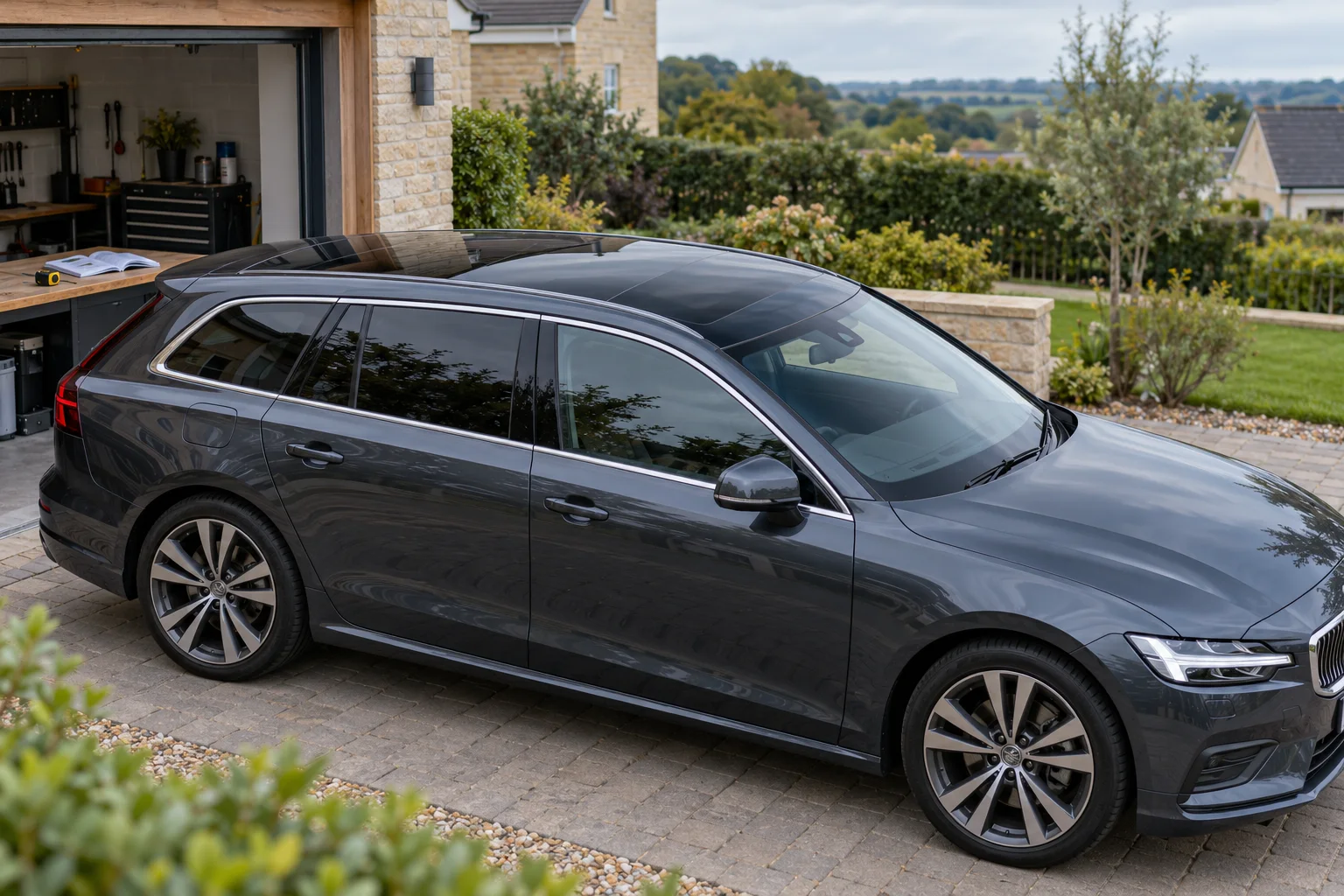
Permission comes before a gap measurement
Check the vehicle handbook and exact rack fit for the actual glass-roof option. Permission to install roof bars and permission to open the glass are separate questions. Clearance must account for the complete rack and accessories, including fittings hanging below the bars.
Identify the exact roof option
A panoramic roof can mean fixed glass, an opening panel, multiple panels or a combination. The opening mechanism and the approved carrying arrangement can differ even within one car model. Record the actual roof specification alongside body style, generation and year before consulting a rack selector.
Read the vehicle handbook’s sections on roof carriers and the glass roof. Look for permission, exclusions, load figures and restrictions on operation. Then select the matching roof option in the rack maker’s fit tool. A normal-roof result or a picture of a similar car with bars cannot establish the answer for yours.
If the information conflicts or the glass-roof version is not listed, ask the vehicle or rack maker to resolve the exact combination. Provide the full specification rather than asking whether “panoramic roofs take bars” in general. A documented answer for your car is more useful than a broad yes from a retailer listing.
Separate fitting permission from opening permission
There are two decisions to settle. First, may the specified rack be installed on that vehicle roof? Second, may the opening glass be operated with that rack and the planned accessories in place? An approved rack can still come with a restriction on opening the roof.
Thule’s general safety guidance makes that distinction: glass-roof fitting is subject to the mounting instructions, and opening panels must not interfere with racks or other roof accessories. General guidance does not override a vehicle-specific exclusion. Keep the handbook, kit notes and accessory instructions together when checking the arrangement.
Treat a physical gap as evidence about geometry only. It cannot establish that the contact surfaces, load transfer or glass-roof configuration are approved. Conversely, a permitted rack result does not prove that an added box clamp leaves enough room for every permitted panel movement.
Check all the components that can project towards the glass
Look beyond the top surface of the crossbar. The underside of the bar, feet, bases, fastener ends, clamp jaws and accessory hardware can all occupy space above the roof. A box shell can sit well above the glass while a mounting component extends much lower.
Obtain the relevant diagrams and dimensions before installation where possible. Do not estimate the lowest point from the nominal rack height. For an opening panel, the path can include an initial tilt before sliding, so clearance in the fully shut or fully open position alone may miss an intermediate conflict.
Do not use the powered roof as a clearance gauge
An electric panel can move quickly and may contact an obstruction before you can react. Do not press the open button simply to discover whether it hits the rack. First establish the permitted operation and opening envelope from the vehicle information and exact system guidance.
Where those instructions allow an operational clearance check, follow their method and keep the path clear. If the geometry or permission is uncertain, leave the roof shut and seek advice. Never force glass, rely on a reversing mechanism to protect the equipment or hold a mount out of the way during movement.
The same principle applies when accessories change. Bars alone, bars with a bike carrier and bars with a box are three different physical arrangements. A clearance observation with the empty rack does not carry over to everything subsequently attached to it.
Avoid choosing a low rack by appearance alone
A tidy low-overhang system can be appealing on a glass-roof car. Its actual approval and clearance still depend on the complete fit, not its streamlined outline. Front and rear bar lengths may differ, and a single component listing does not describe the installed height of the finished rack.
Do not add improvised spacers or substitute taller feet to create a gap. Those changes can alter the attachment geometry and load path. If the manufacturer offers another approved system, compare that full arrangement and repeat every clearance check rather than mixing its components with the original fit.
Include the roof box and its mounting hardware
For a box, consider mount engagement, underside clearance, lid access, hatch opening and antennae as well as the glass. Moving the shell within its approved mounting range may change some clearances, but it cannot fix a prohibited vehicle attachment. Sliding the bars themselves is only allowed where the rack instructions permit it.
For bikes or water equipment, include the accessory’s fasteners and any straps or loose ends in the clearance assessment. Follow the restraint instructions so nothing can hang into an opening panel’s path. The complete setup needs checking in the configuration in which it will actually be used.
Use the load figure for the actual roof version
Do not assume the roof allowance from a standard-roof model applies to a panoramic version. Obtain the dynamic carrying limit for the actual vehicle and check the rack, feet, kit and accessories for any lower applicable limits. A stationary load claim is not the driving allowance.
Add the complete rack, adapters, empty carriers and luggage. If the permitted vehicle figure is 60kg in a hypothetical example, a 6kg rack and 15kg box consume 21kg before packing. That leaves at most 39kg under the vehicle limit, subject to any lower system or box constraint. The calculation does not itself establish permission to fit the rack.
Use the roof-load calculator only with verified figures. Keep a record of which roof version each limit applies to, particularly if an online specification page groups several versions together.
Keep a clear record of any operating restriction
Before the trip, write down the approved component codes, mounting positions and roof-operation restriction. Make sure other drivers understand it. A reminder can help prevent accidental operation, but it does not turn a conflicting setup into an approved one.
Repeat the checks after changing an accessory, adapter or bar position, and after any relevant repair or replacement. Store the instructions with the rack so next season’s installation starts from the same verified information. Use the complete box checklist for the other fit questions, including hatch clearance and total height.
Guidance checked October 2026 against Thule rack safety instructions, the vehicle selector and the linked component manuals. The actual vehicle handbook and exact fit restrictions determine permission.
Frequently asked questions
Can roof bars be fitted to a car with a panoramic roof?
Sometimes, subject to the exact vehicle, glass-roof option and rack instructions. Permission to install bars is separate from permission to open the glass with the complete carrying setup installed.
Can I test clearance by pressing the roof-open button?
Do not use powered movement to discover an unknown collision. First establish permission and the opening envelope from the relevant instructions or specialist advice; never force glass against a bar or mount.
Will taller feet make a prohibited setup acceptable?
No. Physical height does not override the approved vehicle fit or restrictions. Use only the specified components; improvised spacers or unrelated feet do not establish permission.
Does enough clearance under the bars mean the box is clear?
No. Box clamps, bolts, feet and other accessories may hang below the crossbars. Check the entire installed arrangement and any permitted glass movement, not just the upper bar surface.
Can a fixed glass roof have a different load limit?
It may have different permissions or limits from another roof version of the same car. Use the handbook and fit guidance for the actual roof specification rather than a general model figure.