
Winter guide / Journey and ownership
Roof Boxes and Carriers in Snow and Ice: Access, Inspection and Safe Handling
Clear snow safely, inspect frozen mounts and locks, plan access and handle roof equipment in winter. Check actual height, loaded mass and when to delay the journey.
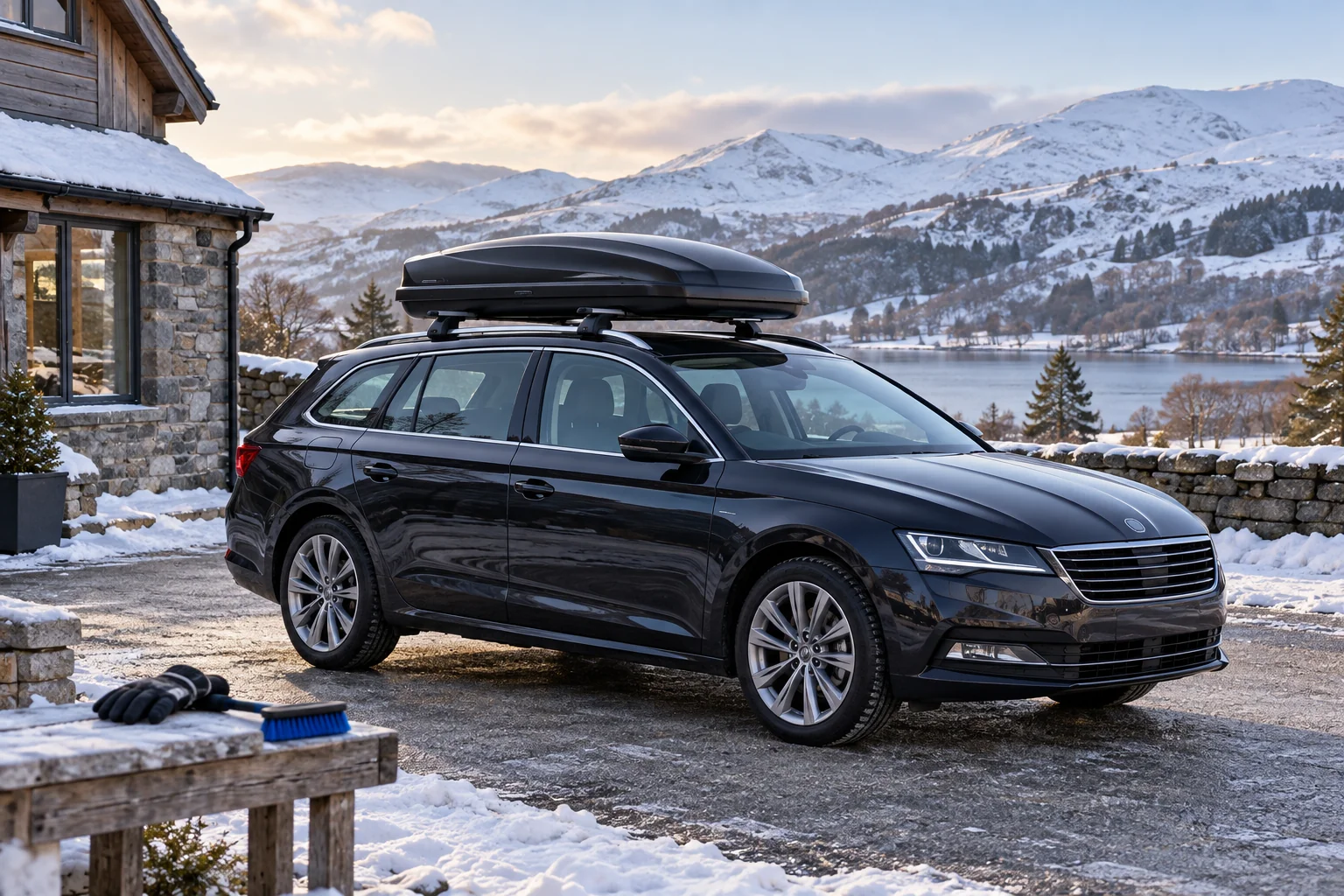
Prepare the equipment before winter conditions arrive
Winter roof carrying is about more than whether skis fit inside a box. Snow can obscure fixings, ice can prevent proper operation and slippery ground can make an ordinary lifting task unsafe. Plan access, inspection and drying before reaching the coldest part of the journey.
Keep the exact box, rack and carrier instructions available. Check the state of seals, locks, clamps, pads and prescribed restraints while the equipment is clean and accessible. Replace damaged or missing parts with confirmed matches rather than waiting to discover the fault in a frozen car park.
Read current weather and road updates, including the return route. If snow or ice makes safe clearing, access or driving impractical, postpone or change the journey. Equipment condition and driving conditions are separate checks; passing one does not resolve the other.
Clear the car and load without relying on airflow
The Highway Code requires clear vision and legible, unobscured lights and number plates, and directs drivers to remove snow that could fall into the path of other road users. Include the roof equipment in that assessment. Do not assume a slab of snow on a box will disappear harmlessly once the car moves.
Choose a stable place to work and a method suitable for the actual surfaces. Avoid dragging grit over the shell or using a hard scraper intended for glass on plastic or seals. Follow the equipment maker’s care advice rather than treating every automotive cleaning product as interchangeable.
If the top of the equipment cannot be reached safely, arrange suitable access or help and delay departure. Standing on an icy wheel, sill or roof is not an acceptable substitute for stable footing. Keep people clear of falling snow during the task.
Inspect contact surfaces and mounts after clearing
Look at the full mounting arrangement, not just the visible upper clamp. Ice, packed snow and grit can hide a displaced pad, obstruct a control or prevent the prescribed contact. Work through the manufacturer’s inspection sequence before judging whether the attachment is correct.
Do not compensate for an uncertain seat by overtightening. A frozen handle that feels resistant has not confirmed the correct clamp load. If the mounting cannot be inspected or operated as intended, move to a suitable environment for the prescribed thawing and inspection method before travelling.
Where equipment has been removed and refitted, treat it as a fresh installation. Recheck bar positions, clamp range, load limits and any required initial journey inspection. A familiar box still needs its full approved fit after a change.
Open locks and lids only through the approved method
A key should not be used as a lever against a frozen mechanism. Likewise, a lid that is stuck around its seal should not be forced open with a tool. Stop and establish whether ice, trapped luggage or a mechanical fault is responsible.
Use only the lock and surface treatment permitted by the actual manufacturer. A product suitable for a windscreen or door lock may not be suitable for a roof-box seal, plastic shell or carrier pad. Protect neighbouring materials from any approved treatment as directed.
Do not pour hot water over the equipment or use a flame or intense heat to release it. Those approaches can create damage and further icing. If the lid cannot be closed and locked normally afterwards, the vehicle is not ready to travel with that load.
Choose a controlled loading and unloading position
Clear a stable working space and consider how bags, skis or boards will be supported before a restraint is released. Cold hands and bulky gloves can make small clips harder to operate, so allow time and good light. Do not leave equipment unsecured while searching for a key or tool.
Check the lid support and opening movement. Avoid opening it in strong gusts, under falling snow from a building or where a low roof restricts the movement. Use the strong-wind guide for the decision about whether access can be controlled.
A lower-reaching carrier can be worth considering if it suits the equipment and vehicle. It is not a reason to load alone when the task cannot be handled safely. Choose the carrying method around the person’s actual reach and the permitted loading process.
Keep the load within its limits after a snowy stop
Remove accumulated snow and ice rather than treating the original packing calculation as permanently valid. Water retained in equipment and bags also forms part of the travelling mass. Reassess the return load if its condition has changed materially.
A ski carrier’s capacity refers to its approved equipment arrangement, not any extra bundle placed over the skis. Keep the roof-box shell free of additional exterior loads unless expressly approved. Use the prescribed restraints and check that frozen or damaged straps still operate correctly.
The roof-load calculator supports the weight arithmetic, while the vehicle payload guide considers the whole car. Neither tool can confirm an ice-obscured mounting or a slippery handling task.
Check actual height and the complete route
Record the assembled travelling height after the permitted equipment is fitted. Do not use snow accumulation as a reason to accept less clearance, or assume the car’s brochure height describes the loaded setup. Choose a safe measurement method with adequate help and footing.
Follow the total-height guide and check the intended car parks, accommodation access and travel bookings. A roof box that cleared a summer entrance can still require a fresh assessment after changing bars or adding a winter carrier.
Drive and stop for the conditions
A sound installation does not remove the risks of snow, ice, poor visibility or crosswinds. Follow official journey advice and the vehicle’s winter-driving instructions. Any equipment speed ceiling remains an upper limit, not a target in adverse conditions.
At appropriate safe stops, inspect as the instructions require. Do not conduct routine checks from a live traffic lane or continue with suspected load movement just because the destination is nearby. Use the road-specific breakdown procedure if the vehicle cannot safely continue.
After the trip, unload and dry equipment in a suitable place. Clean the box and mounts through the prescribed method and inspect for grit, corrosion or damage before storage. The wet-kit guide covers the separate drying and containment plan.
Sources checked October 2026: Highway Code winter and wind advice, Met Office travel guidance and Thule box care/safety. Use the exact equipment manual for surface treatment and operation.
Frequently asked questions
Can I drive with snow on a roof box?
Remove snow that could fall into the path of other road users and complete the required visibility and equipment checks. Do not rely on driving to blow it off. If the equipment cannot be reached and cleared safely, delay the journey or arrange suitable help.
Can I use windscreen de-icer on a frozen roof-box lock?
Only if the exact box or lock manufacturer permits that product and method. Windscreen suitability does not prove compatibility with plastic, coatings, seals or lock components. Do not pour hot water over the equipment or force a frozen key or lid.
Does a frozen clamp need tightening harder?
No. Clear and inspect through the prescribed method before deciding what adjustment is required. Ice can conceal the contact surfaces and hardware. Excess force is not a substitute for establishing correct seating, condition and the manufacturer’s tightening method.
Can a ski-carrier slide-out feature replace safe footing?
No. A sliding carrier can improve reach only when correctly fitted and used within its instructions. You still need stable ground, controlled handling and safe access. Do not climb on an icy tyre, roof or sill to compensate for an unsuitable loading position.
Should I leave the box open to dry while driving?
No. Travel only with the box closed, locked and loaded as instructed. Unload and dry equipment in a suitable stationary setting. Moisture control must not defeat the lid, seals, locks or load restraint.