
Accessory guide / Bike carrying
Replacement Roof Bike Rack Straps and Wheel Holders: Finding the Correct Parts
Identify replacement roof bike rack straps, wheel cradles, rim protectors and assemblies by exact carrier model, revision, part number and front or rear position.
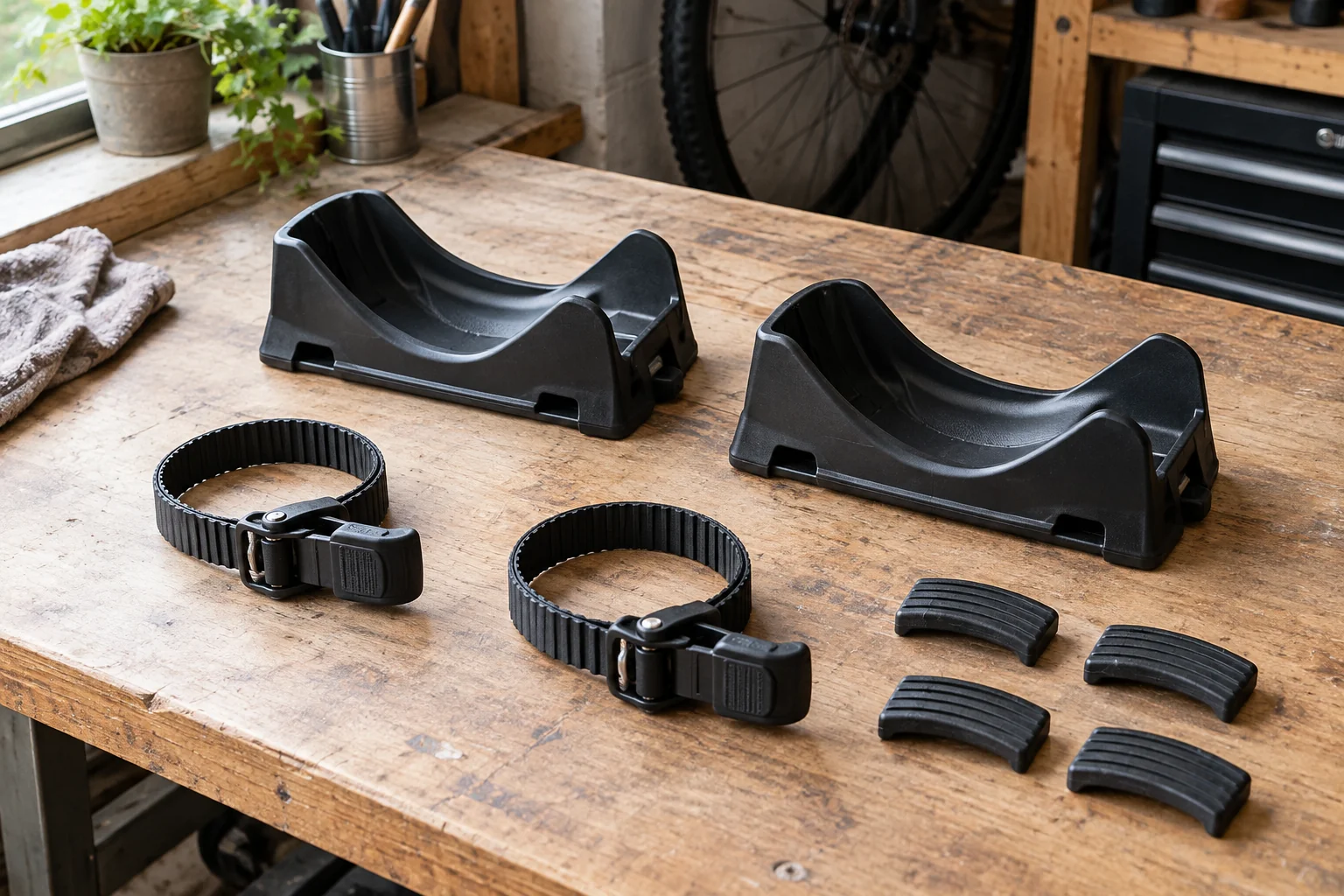
Buy replacement parts from the exact carrier diagram, not from the general name “bike-rack strap”. First identify the carrier model and revision, then the damaged component, its position and the specified replacement reference. A wheel strap, ratchet, cradle and rim protector have different jobs even when sold close together.
Inspect the receiving structure before ordering. Replacing a small part is useful only if the rail, mounting point and surrounding mechanism remain sound and the replacement is approved for that unit.
Identify the carrier and preserve its details
Find the carrier’s product label, full model number and any relevant revision or serial information. Record whether it is a roof carrier, rear platform or another system; a spare advertised for the same brand may belong to a completely different attachment.
Keep clear photographs of the whole carrier and the problem area. Include the opposite end where it helps establish front versus rear. If a label is missing or the unit combines parts from different ages, ask the manufacturer to identify it before treating a familiar short model name as sufficient.
Download the correct instructions and spare-parts diagram. The general bike-carrier guide explains carrier styles, but repair selection needs the specific product reference and actual revision.
Work out which component has failed
Look separately at the strap, ratchet or buckle, wheel support, sliding attachment and protective contact piece. A worn tooth on a strap can produce a different fault from a buckle that no longer retains a sound strap. A cracked cradle can make a correctly engaged strap appear loose.
Do the inspection with the bicycle removed and the carrier supported as its instructions require. Clean only enough to inspect using the approved maintenance method. Dirt can obscure a crack or prevent you seeing how a component is attached, but cleaning is not a repair for damaged material.
Do not test a suspected failure by driving with a bicycle loaded. The rattle and movement guide helps separate faults at the bars, carrier and bicycle interfaces before selecting a part.
Read front and rear positions from the diagram
For the selected ProRide 598, the current manufacturer spare-parts diagram identifies 52958 at the front wheel-holder position and 52959 at the rear. Those are useful exact references, but the diagram must still match the actual carrier being repaired.
| Reference | Component shown | Do not substitute for |
|---|---|---|
| 52958 | Front wheel-holder assembly | Rear 52959, legacy 591 or another carrier family |
| 52959 | Rear wheel-holder assembly | Front 52958 or a universal wheel strap |
| 52670 | Rim protector in the diagram | A worn strap, failed ratchet or wheel-holder body |
| 598101 | Separate approved wider-tyre wheel-holder set | An ordinary replacement for every damaged mounting interface |
Older diagrams and retailer descriptions can show other references. Do not infer that a new number supersedes an old one unless the manufacturer confirms the relationship for that unit. A matching photograph is supporting information, not a documented compatibility chain.
Match the complete package and required small pieces
Read the listing title, selected variant and package description together. Establish whether you are buying a strap alone, a holder with restraint components, a pair of pieces or a single side. Check any required clips, pins or protectors against the diagram and the installation instructions.
Do not assume every visible piece in an illustrative photograph is included. If the inventory is unclear, obtain a definite answer for the selected package before disassembling the old carrier. Keeping an intact opposite-side assembly can help identify the arrangement, but it is not a substitute for the instructions.
A short delivery lead time is useful only once the part is correct. Keep the carrier out of service while an essential restraint or structural attachment remains damaged or incomplete.
Keep wider-tyre conversions separate from repairs
A carrier’s approved fatbike accessory changes a defined wheel-support arrangement. It is not permission to install arbitrary longer straps, use oversized tyres in an ordinary cradle or extend the tray beyond its specified positions.
For UpRide, the selected wider-tyre accessory is 599100, a different part. Use the wide-tyre guide when the reason for replacement is a different bicycle rather than damage. A purchase that changes tyre support requires the whole bike fit to be reassessed.
Inspect the structure around the replaceable part
Look at the rail, adjustment channel, receiving clips and any relevant mounting surface. Stop if there is cracking, distortion, severe wear or evidence that the holder has been forced beyond its range. A new cradle cannot restore a damaged load-bearing channel.
Likewise, a wheel-restraint repair does not fix a carrier-to-bar attachment that moves, a rack foot that is incorrectly seated or a damaged frame arm. Identify those faults independently and use the appropriate manufacturer assessment or replacement procedure.
Do not add tape, cable ties, glue, drilled holes or improvised packing to make a part feel tight. Such changes can hide the original fault while altering the intended mechanism. Replace only the components that are approved to be serviced, following their exact instructions.
Reassemble and verify before carrying a bike
Follow the prescribed installation sequence and use the specified tools and settings for the actual part. There is no universal tightening figure for all bike-rack fasteners. A strap ratchet, sliding holder and bar mount cannot be treated as the same connection.
Check adjustment and engagement with the carrier unloaded as directed, then complete the full bike installation and inspection only after the repair is confirmed. Verify the wheel sits correctly, the restraint follows its intended path and the relevant protective piece remains in place.
Save the replacement reference and instruction revision with the carrier record. Repeat the pre-journey checks and prescribed in-journey inspections. If the same looseness returns, stop using the arrangement and have the underlying cause assessed rather than repeatedly replacing the visible strap.
Sources and selected Amazon packages checked October 2026: current ProRide 598 spare-parts diagram, ProRide instructions, ProRide 598101 wider-tyre set and the exact front/rear listings above. Actual revision and supplied inventory must agree before repair.
Frequently asked questions
Are roof bike rack wheel straps universal?
No. Strap length, width, ratchet teeth, buckle and attachment geometry can differ. Match the exact carrier, revision and illustrated part reference. A generic strap that appears to close does not establish the intended retention or load path.
What is the difference between ProRide 52958 and 52959?
The current ProRide 598 spare-parts diagram identifies 52958 as the front wheel-holder assembly and 52959 as the rear. Match the actual carrier revision and position before ordering. Do not assume the two ends are interchangeable or that either part fits legacy 591 or UpRide equipment.
Does a new rim protector replace a worn wheel strap?
No. A protector cushions or positions the prescribed contact; it is not the load-bearing strap or ratchet. Identify which component is damaged, then follow the exact spare-parts diagram and approved replacement procedure.
Can I buy a longer strap to carry a fatbike?
Use the carrier’s approved wider-tyre conversion where required. The selected ProRide 598101 package is a replacement wheel-holder set for specified 3–5in tyres. A longer unrelated strap alone does not create the correct support or extend weight and wheelbase limits.
Will a replacement wheel holder repair a loose carrier rail?
Only if the fault is the replaceable holder and the receiving structure is sound and compatible. A cracked, distorted or worn rail or mounting interface needs the manufacturer’s assessment. Do not use a new part, extra tightening or packing to conceal structural damage.