
Ownership checklist / Journey and ownership
Roof Bars, Roof Boxes and Car Insurance: What to Ask Your Insurer
Check roof-rack declarations, temporary equipment, accessory and contents cover, theft conditions, borrowed boxes and overseas use with your own insurer.
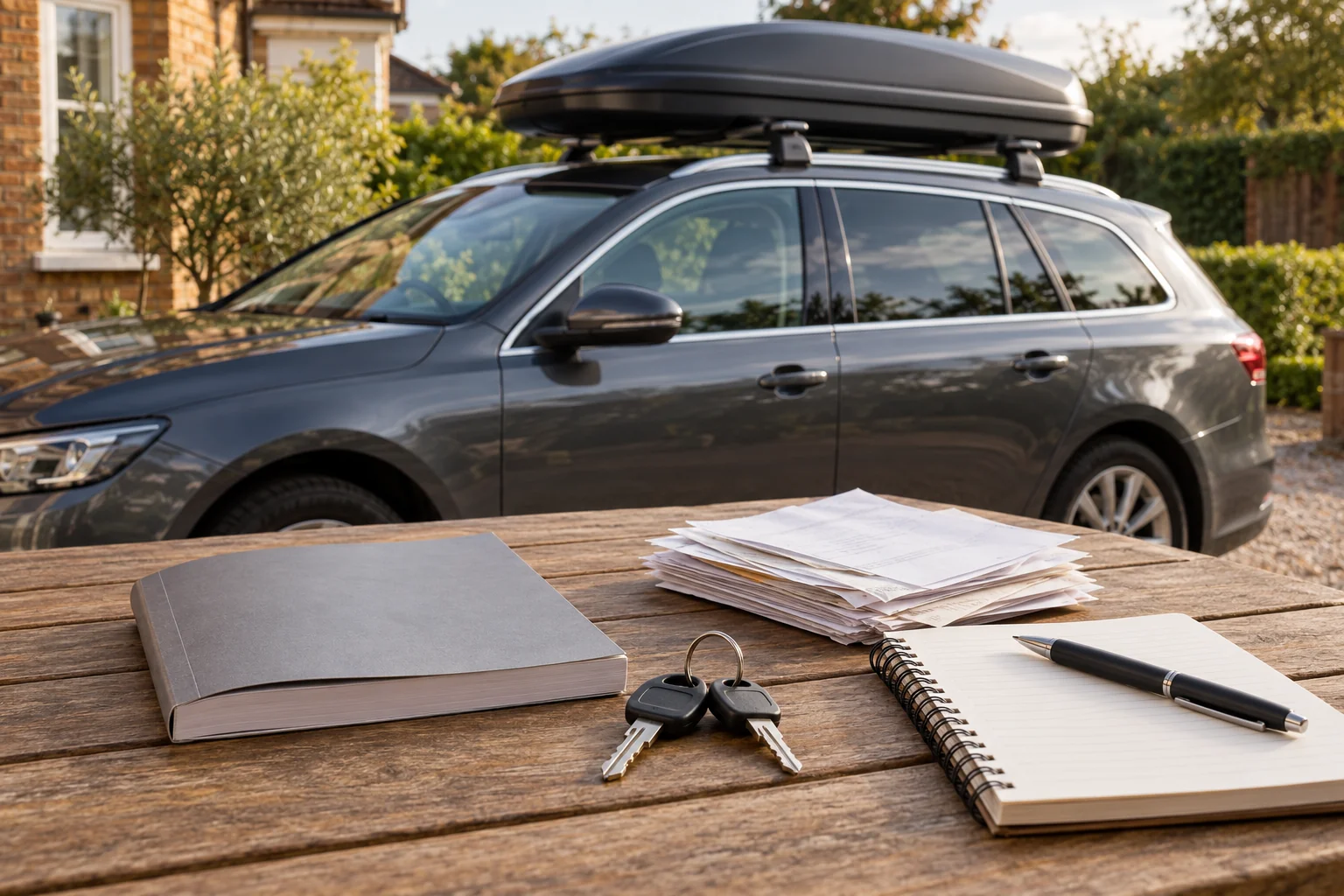
Ask about the actual carrying setup
Roof equipment creates several insurance questions, not just one modification tick box. You need to know whether the insurer accepts the fitted arrangement and whether damage, theft and the luggage itself are covered. An answer to the first question does not automatically answer the others.
Read the policy’s application questions, schedule and terms for changes during the policy period. Give the insurer accurate details of the bars, feet, fitting kit, box and any bike, boat or rear carrier. Include a towbar if one is fitted and explain whether the equipment is permanent, temporary, hired or borrowed.
Ask before installing or using an uncertain setup and retain the written response. This checklist helps organise that conversation; the acceptance and claim terms must come from your own insurer and documents.
Do not generalise from another insurer’s guidance
Published insurer guidance demonstrates why a single rule is unreliable. AXA lists roof racks, bars, bike racks and top boxes among modifications it covers. Churchill advises checking external accessories even where temporary. By Miles describes a roof rack as a modification to select during its quote process.
Those are examples of the respective insurers’ approaches, not interchangeable instructions. “Covered modification” does not by itself say whether your individual policy requires notification, whether a premium changes or how much the accessory is insured for.
Describe the equipment plainly rather than guessing which menu label is closest. If an online form has no suitable choice, ask the insurer or broker how to record it. Do not select “no modifications” solely because a roof box can be removed.
Prepare a useful equipment record
Make a short list containing the exact models, fitting location and ownership. Include whether the rack is manufacturer-supplied or aftermarket and whether a specialist fitted it. Have purchase documents and approximate replacement values available, distinguishing the box from separately purchased feet, bars and carriers.
A photograph can support identification, but it does not certify an approved vehicle fit. Keep the relevant manufacturer instructions and installation record separately. An insurer’s acceptance is likewise not a substitute for the vehicle and carrier compatibility checks.
For a borrowed or hired box, note who owns it and what the hire or loan terms require. Ask how accidental damage, theft, excesses and liability to the owner are handled. Do not assume the owner’s home policy or the hirer’s car policy fills every gap.
Separate the cover questions
| Topic | Ask explicitly | Record |
|---|---|---|
| Acceptance/declaration | Must these exact accessories be declared, and how? | Accepted description and any change confirmation |
| Damage to the car | What happens if fitted equipment damages the vehicle? | Relevant cover, exclusions and excess |
| Box, bars and carrier | Are these accessories insured for damage or theft? | Value basis, limits and security conditions |
| Contents | Which luggage or sports items are covered? | Policy responsible, per-item limits and exclusions |
| Third-party loss | How is damage caused by the setup considered? | Applicable liability terms and duties |
| Travel/hire/storage | Do territories, hired items or off-car storage change cover? | Written terms and required actions |
Use the insurer’s own terminology when it replies. A statement that accessories are “included” needs a value limit and an explanation of the situations covered. Likewise, a contents allowance can exclude particular sports equipment or require a different policy for higher-value items.
Ask about theft and unattended conditions
Find out what must be locked, how keys must be handled and whether unattended or overnight parking has restrictions. Ask whether contents can remain in the box and whether leaving it fitted off a trip changes the cover. Avoid assuming a hard shell makes luggage equivalent to items locked inside the car.
Check the claim evidence requirements before you need them. Retain model and serial information where provided, invoices and photographs, together with the insurer’s acceptance. Keep those records somewhere accessible if the equipment is stolen.
Do not buy a new lock pack simply because the insurance question is unresolved. First establish what your policy actually requires and whether the existing correctly used locks meet that requirement. The lock compatibility guide addresses the separate hardware decision.
Check contents cover with the right policy
The car policy, home contents policy, personal possessions cover and travel insurance may each define luggage differently. Ask which policy would respond to the specific item and circumstances rather than assuming multiple policies create complete protection.
Describe expensive sports equipment, electronics or specialist items individually. Ask about single-item limits, accidental damage, theft from an unattended vehicle, evidence of forced entry where required and any territorial limit. Check how excesses and other-insurance clauses work if more than one policy may be relevant.
Choose a practical security and access plan for valuables. The box’s load capacity and lock design do not establish a suitable place for everything you own. Follow the actual storage, temperature and security requirements of the contents too.
Include overseas travel and changes during ownership
Tell the insurer where the vehicle and equipment will be used and check the period and level of overseas cover. Ask about breakdown recovery with the loaded height or rear extension and whether a damaged carrier or detached box can be transported. These are useful practical questions even when normal driving cover is confirmed.
Repeat the declaration check after changing the vehicle, adding a towbar or switching to a different carrying method. Review the renewal documents so an earlier telephone answer has not been lost from the recorded description.
A temporary hired box for one holiday still needs the insurer’s own answer. Keep the hire terms and confirm who should be contacted if it is damaged or stolen. Do not treat a friend’s experience with a different policy as approval for your trip.
Correct an omission without guessing the outcome
If the equipment has not been discussed and the policy position is unclear, contact the insurer with accurate details. Ask what changes are needed and when any amended cover takes effect. Keep the response and check the revised schedule for errors.
Avoid blanket claims that any missed declaration automatically voids every policy, or that removable accessories can never affect a claim. The Financial Ombudsman describes fact-specific checks involving the insurer’s questions, reasonable care, the policy terms and what the insurer would have done with correct information.
If a dispute occurs, use the insurer’s complaints process and retain the evidence. The Ombudsman’s published guidance explains its consumer process and the factors it considers; it does not promise the result of an individual roof-equipment claim.
Keep insurance acceptance alongside the physical checks
Before departure, complete the approved mounting, loaded-mass, restraint, height and journey checks. The pre-journey checklist is useful alongside the insurance record. Neither replaces the other.
Keep a concise confirmation showing the declared setup, any conditions, accessory limits, contents position and overseas requirements. If an answer is unclear, ask the insurer to explain it before relying on the cover.
Sources checked October 2026: AXA modifications guidance, Churchill external accessories, By Miles roof-rack question and Financial Ombudsman non-disclosure guidance. Policy-specific answers must come from your insurer or broker.
Frequently asked questions
Do I need to tell my insurer about a roof box?
Check your policy questions and change-notification terms, then ask the insurer about the exact bars, box and carrier arrangement before use. Insurers treat accessories and modifications differently. Temporary fitting and an unchanged engine do not automatically remove the need to ask.
Will declaring roof bars increase my premium?
That depends on the insurer, policy and actual change. Acceptance, price and property cover are different questions. Obtain the insurer’s answer and any updated documents rather than relying on a general statement that roof racks are always free to declare.
Are the roof box and its contents covered together?
Not necessarily. The accessory, damage to the car, luggage, sports equipment and third-party damage can fall under different terms or policies. Ask about each separately, including limits, excesses, exclusions and unattended-vehicle conditions.
Do locks guarantee insurance cover?
No. A lock’s presence does not establish that a policy accepts the equipment or that its security conditions are met. Ask what locking and key-removal requirements apply and use compatible equipment correctly. Keep proof of purchase and identification records.
What if I forgot to mention the equipment?
Contact the insurer promptly with accurate details and ask how the policy should be corrected. Do not assume every omission has the same outcome. The Financial Ombudsman assesses relevant questions, reasonable care, policy terms and the facts if a dispute later arises.